Backpacking Bolivia
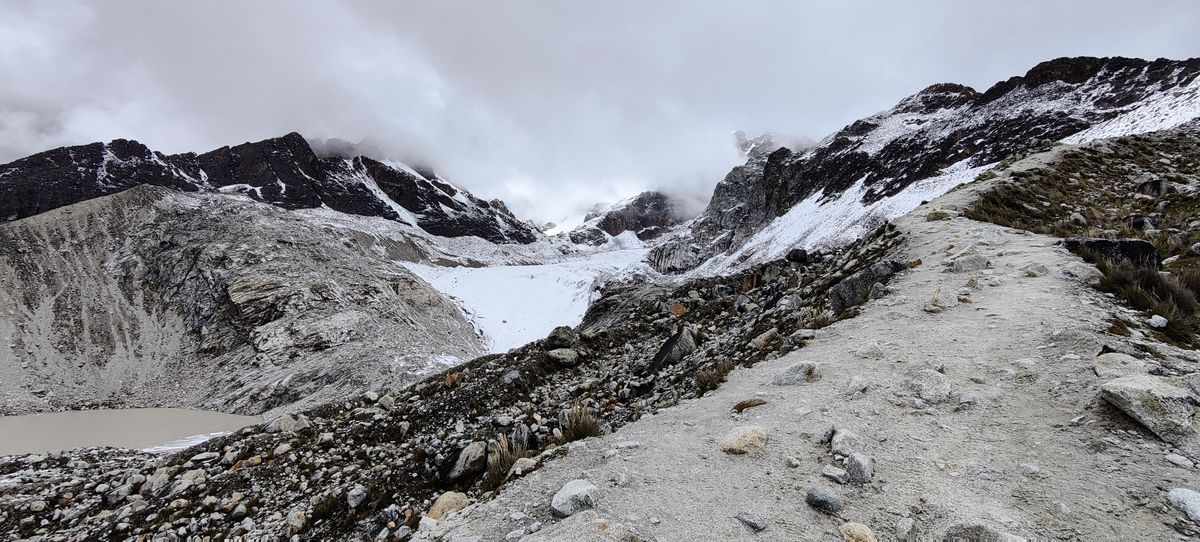
February 2022, two years of Covid behind us: restrictions, isolation, lockdown. It was time for an adventure in a New World.
From Cambridge to Santa Cruz de La Sierra
In September 2021, the time had come to return to the UK. Long story short, a few months prior, I had come back to Rome after leaving my PhD program in London. However, since I had started working for an English startup in July, it was expected that I reside in the UK. Honestly, I wasn't excited at all about spending another winter in the United Kingdom, and deep down, I knew I wouldn't be able to endure it for long. Additionally, working remotely made it extremely challenging to connect with new people and start a new life.
After a couple of months, I began to realize that, despite enjoying my job and learning a lot, what I truly wanted was to live my life. Now, I am quite certain that this desire for freedom was a natural response to the previous years of the pandemic. I felt - and I know I'm not alone in this - that there was a void in my life that I wanted to fill.
It was late October when I began researching exotic destinations, and that's when I stumbled upon Bolivia. I had very limited knowledge about this country. However, just seeing the incredible pictures of the Uyuni desert and learning that many mountains were easily accessible and not too challenging to hike was enough to make me fall in love with Bolivia. I decided to check the prices for plane tickets and fortunately found a great deal: £600, one way, from Cambridge to Santa Cruz De La Sierra.
The Itinerary
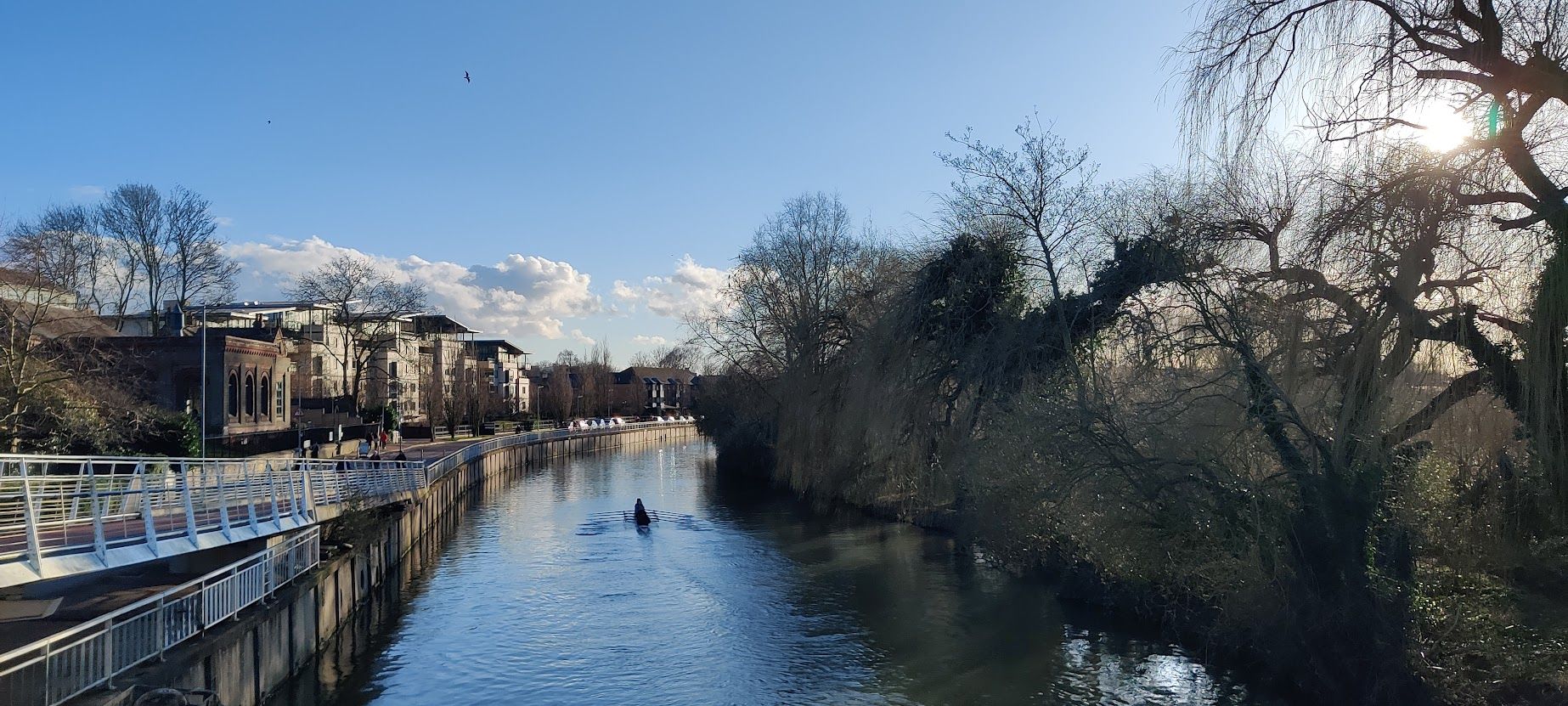
When you work from home in a small town where everything, except the pubs, closes at 5:30 P.M., you end up with a lot of free time. Additionally, the English weather doesn't encourage spending much time outdoors. This provided me with all the necessary ingredients to plan a detailed itinerary for my first trip outside Europe.
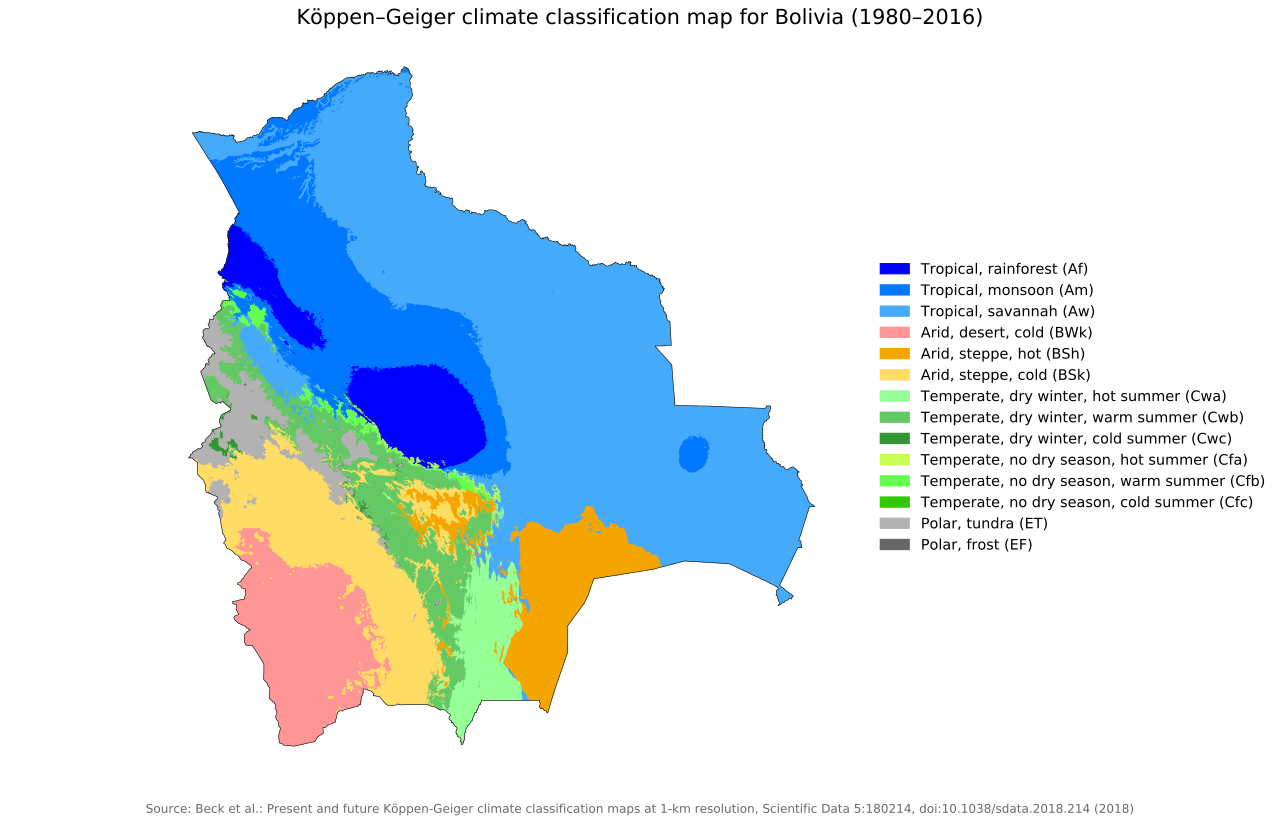
I was amazed to discover the diverse landscapes that Bolivia has to offer its visitors. It soon became clear to me that I needed to allocate at least one month for my travels. The map below is a precise climate classification of the country, but to simplify matters, there are three main regions: the tropical region, the arid region along the boundary with the Atacama desert in Chile, and the Andean mountain chain that separates the first two.
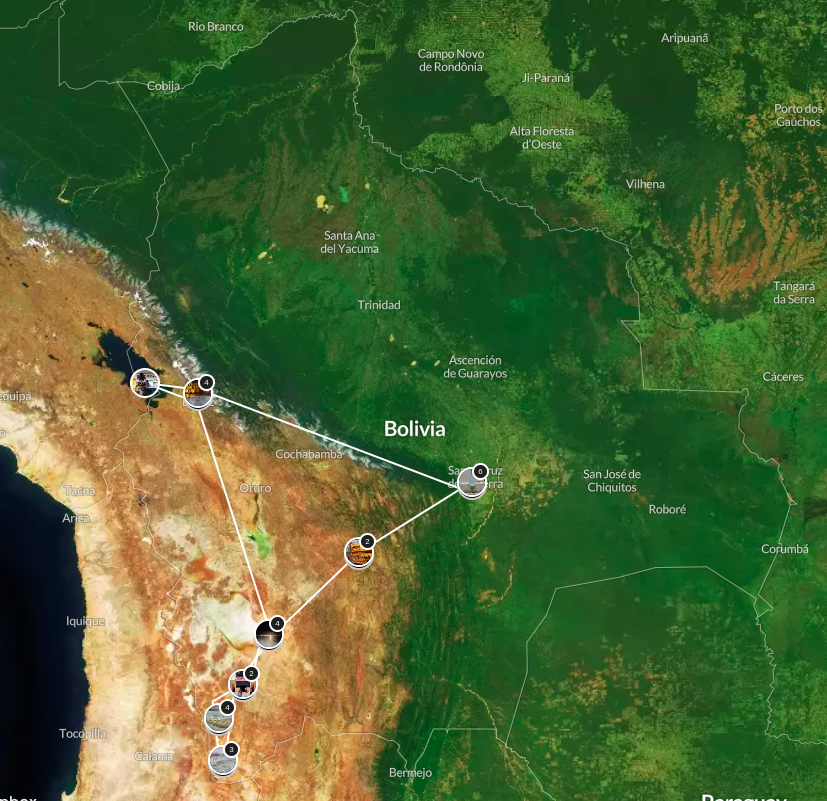
One of the most popular attractions is the Uyuni desert, while from La Paz, the seat of the government, it is possible to access the peaks of the Andean mountains and Lake Titicaca, which is the highest navigable lake in the world and the largest in South America. Being a mountain enthusiast, I didn't want to miss any part of this incredible country. Therefore, I planned to backpack from Santa Cruz de La Sierra, the city where I would arrive, all the way to the Uyuni region, and then continue to La Paz, where my journey would conclude. I opted to travel by coach since Bolivia does not have any trains. Also, I genuinely think that backpacking means taking your time and enjoying the landscapes.
Before Christmas, I also bought my backpack, an Osprey Kestrel 48L and the rest of the equipment: layers and technical clothes for hiking, t-shirts and hiking shoes for the arid weather. The only thing I still had to do was to tell my family and my boss I had bought an one-way ticket to Bolivia.
The Cruceno Carnival
I was incredibly fortunate to have an open-minded boss who understood my needs. We reached an agreement that it would be acceptable for me to take a two-month unpaid leave. It was wonderful - more than I could have hoped for!
On the 25th of February 2022, I finally embarked on my journey to South America. The journey was quite lengthy, as expected. I had to first fly to Madrid, wait for a few hours, and then proceed to Bolivia. I must admit that I was filled with excitement. It was my first solo trip outside of Europe, carrying nothing but my backpack, to South America, which is not the safest place on Earth.
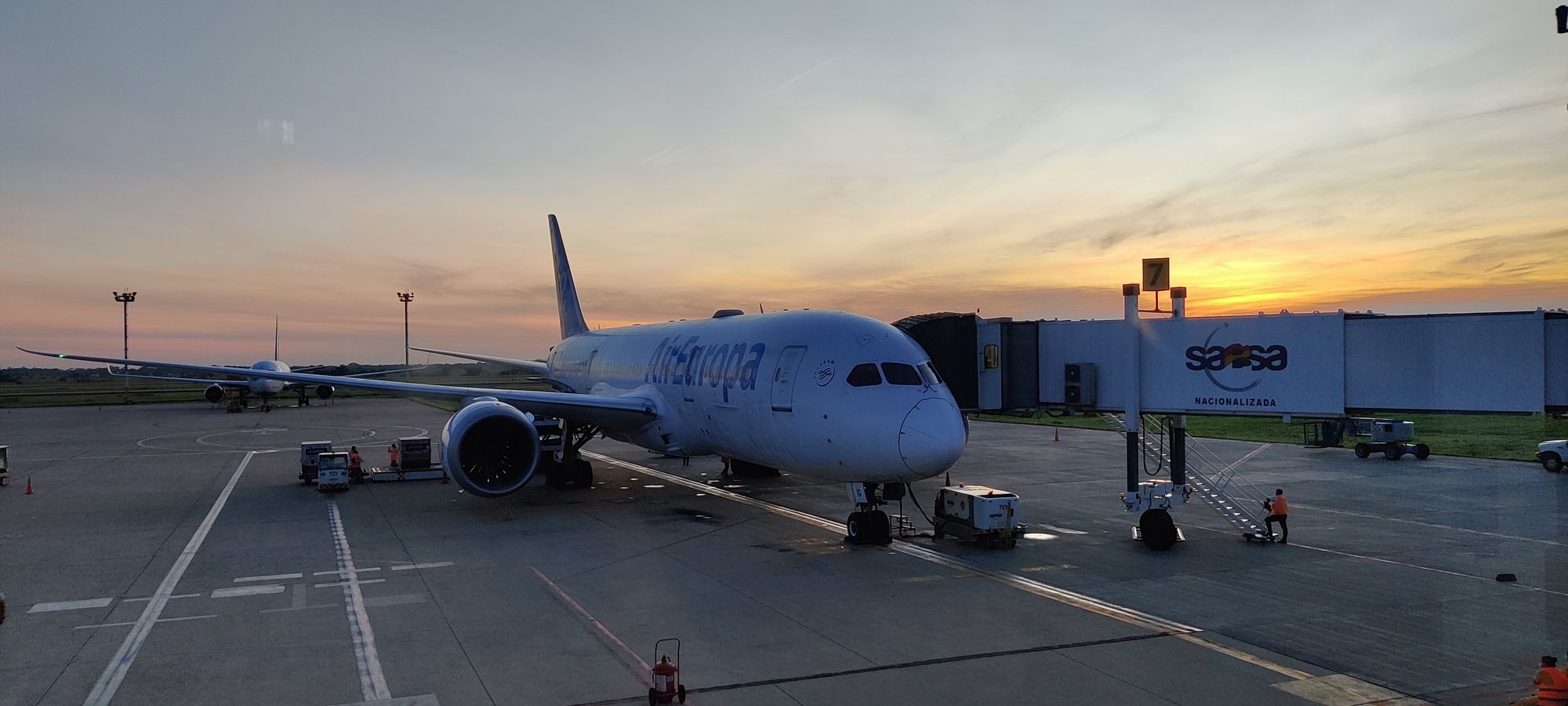
I landed in Santa Cruz de La Sierra at the break of dawn, and I still vividly remember being captivated by the vibrant tropical greenery. The lushness of the plants was unlike anything I had ever seen before. The weather was muggy and intensely hot, a complete contrast to what I had been experiencing in Cambridge. Within a couple of hours, I had settled into a delightful and affordable Airbnb and began exploring the city.
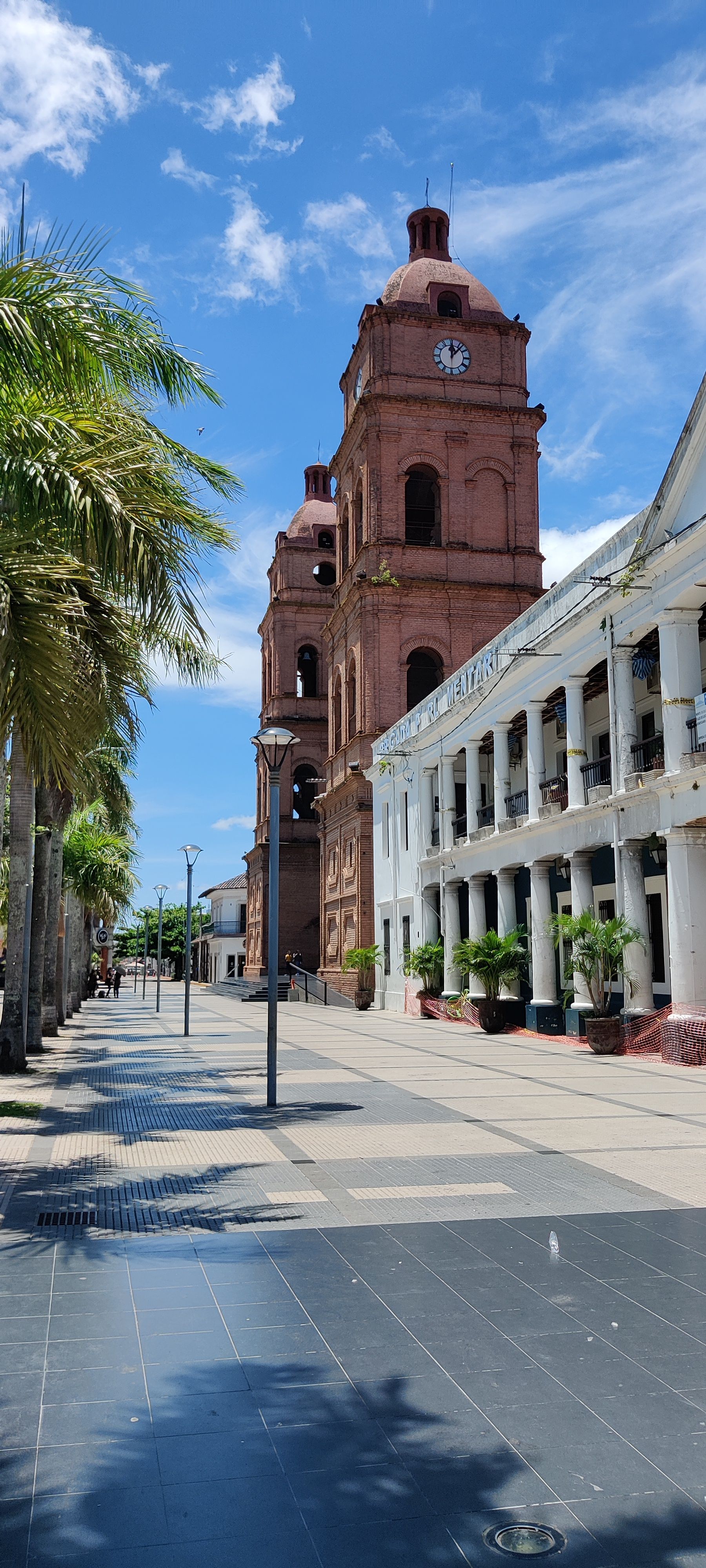
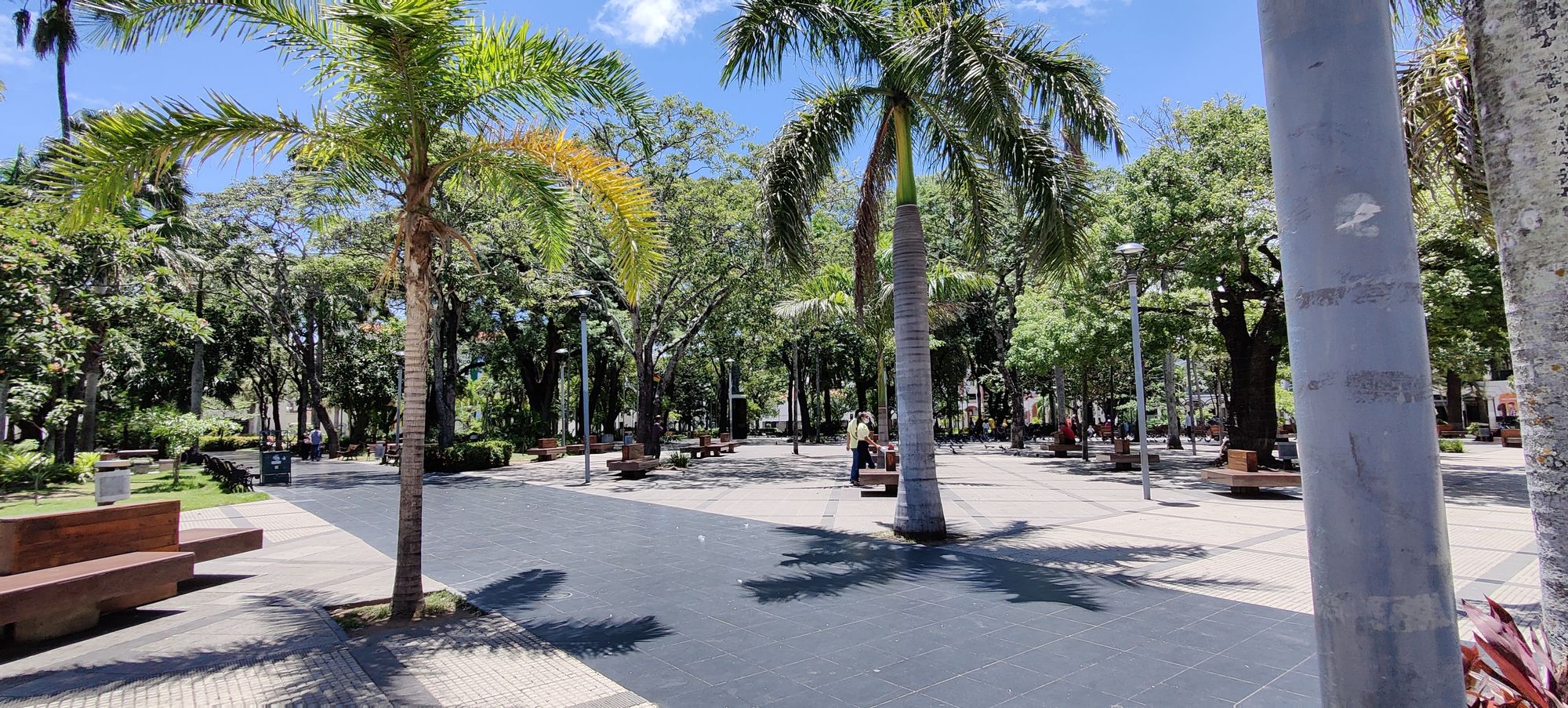
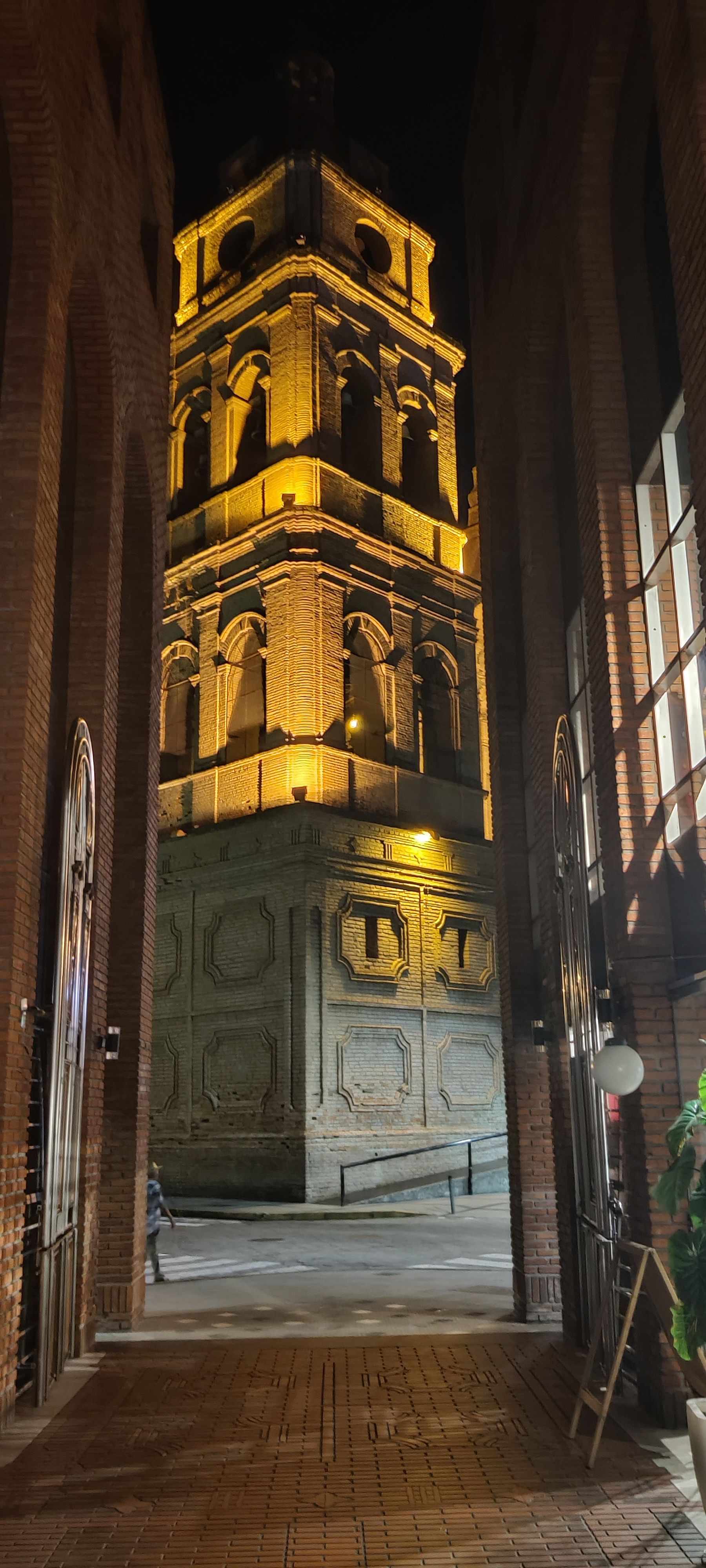
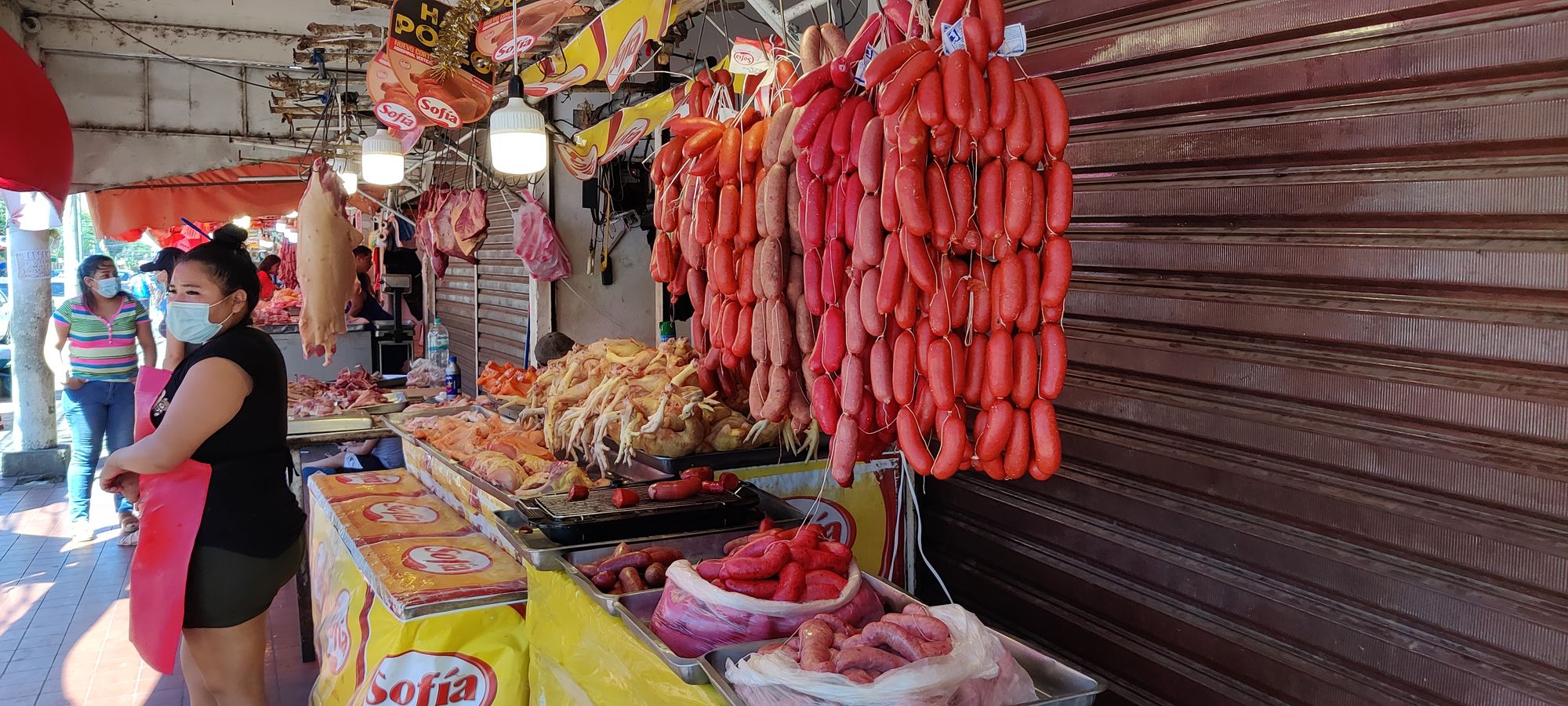
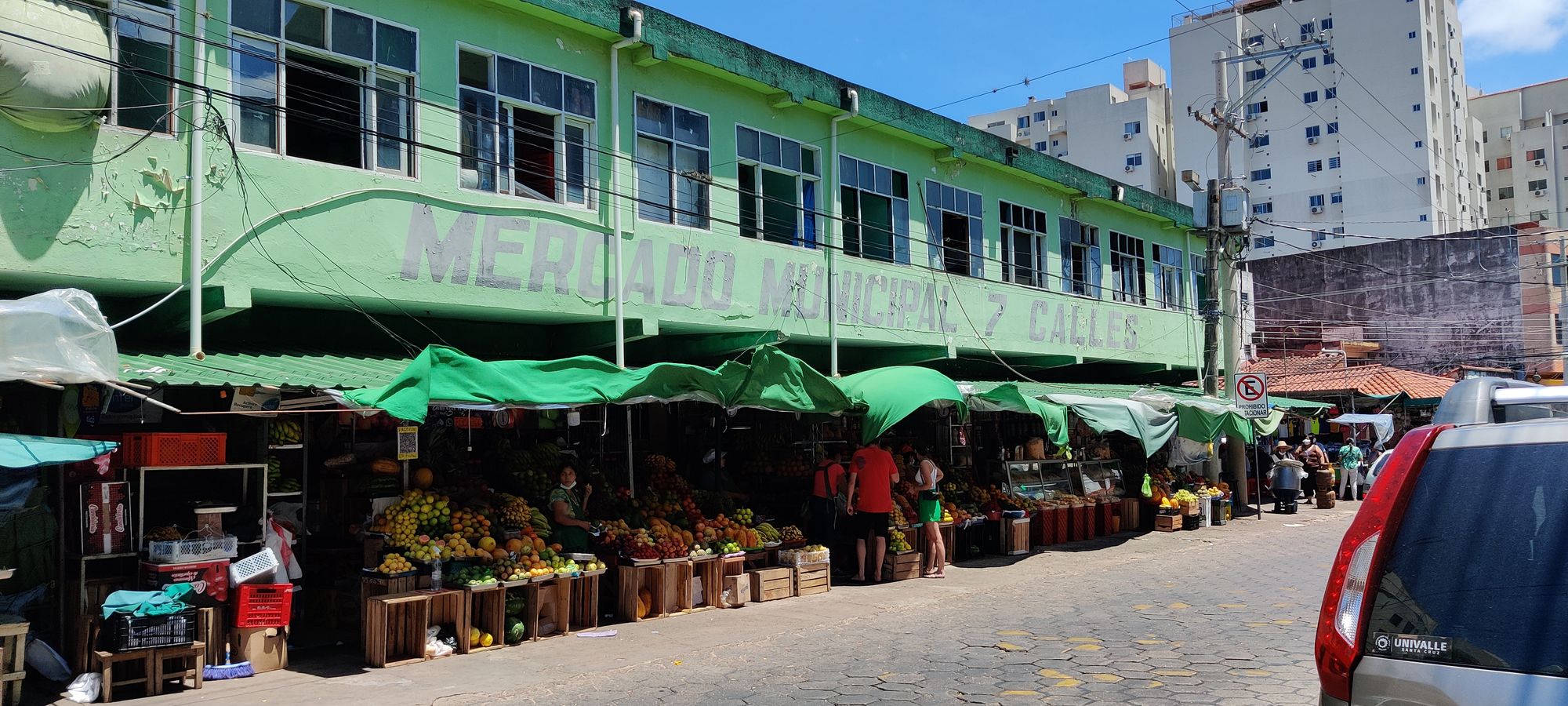
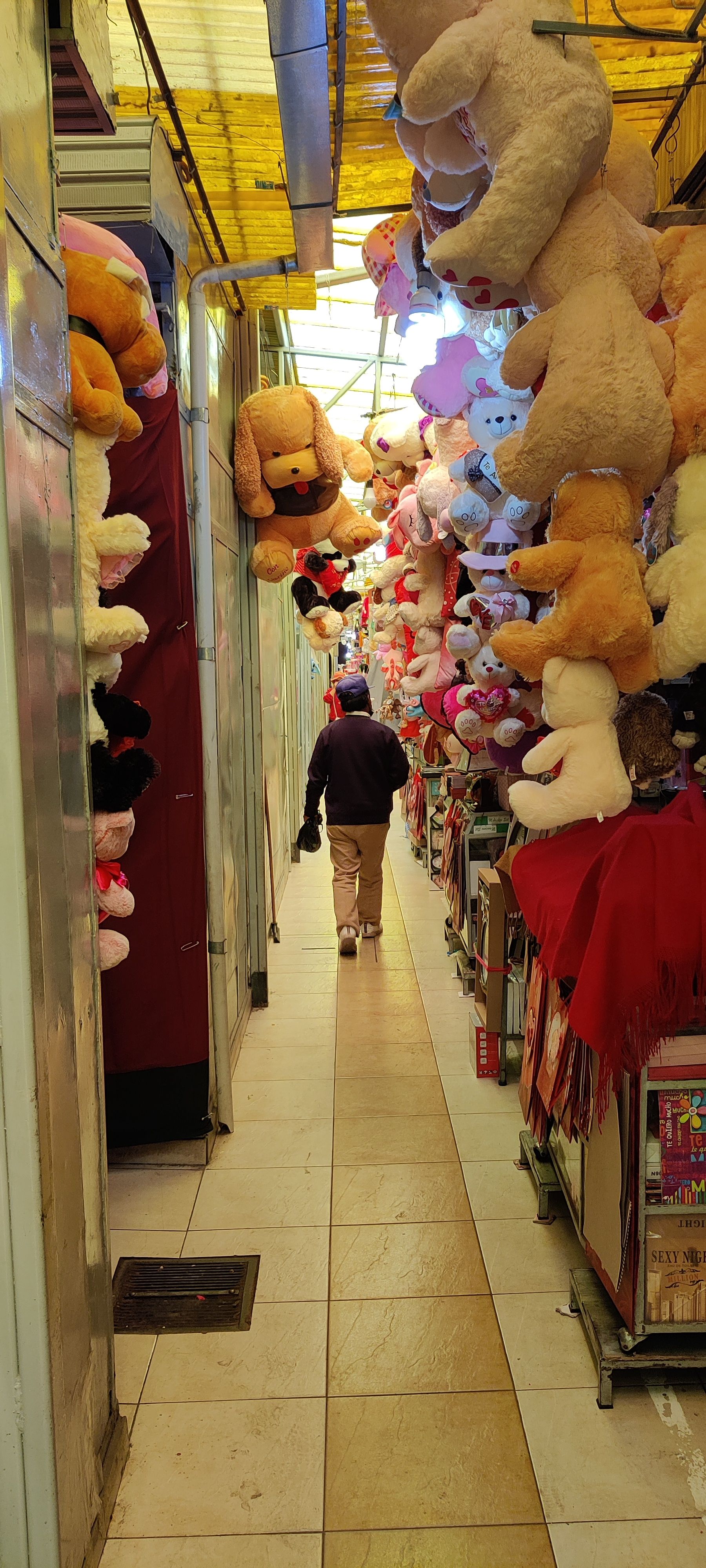
I discovered that my arrival coincided with the Cruceno Carnival and when I left the apartment to live the authentic backpacking life in hostels, I was invited by the manager of the hostel to her party. Apart from the main festivities at the Sambodromo, people in Santa Cruz gather in "contradas" which organize small street parties. To participate in a contrada, you need to purchase their t-shirt, granting you free access to food and drinks. As a special guest, I didn't have to pay anything but still had the pleasure of enjoying the delectable cuisine and the lively celebration. I also had the opportunity to help people in organising the party by going with them to the market and buying food.
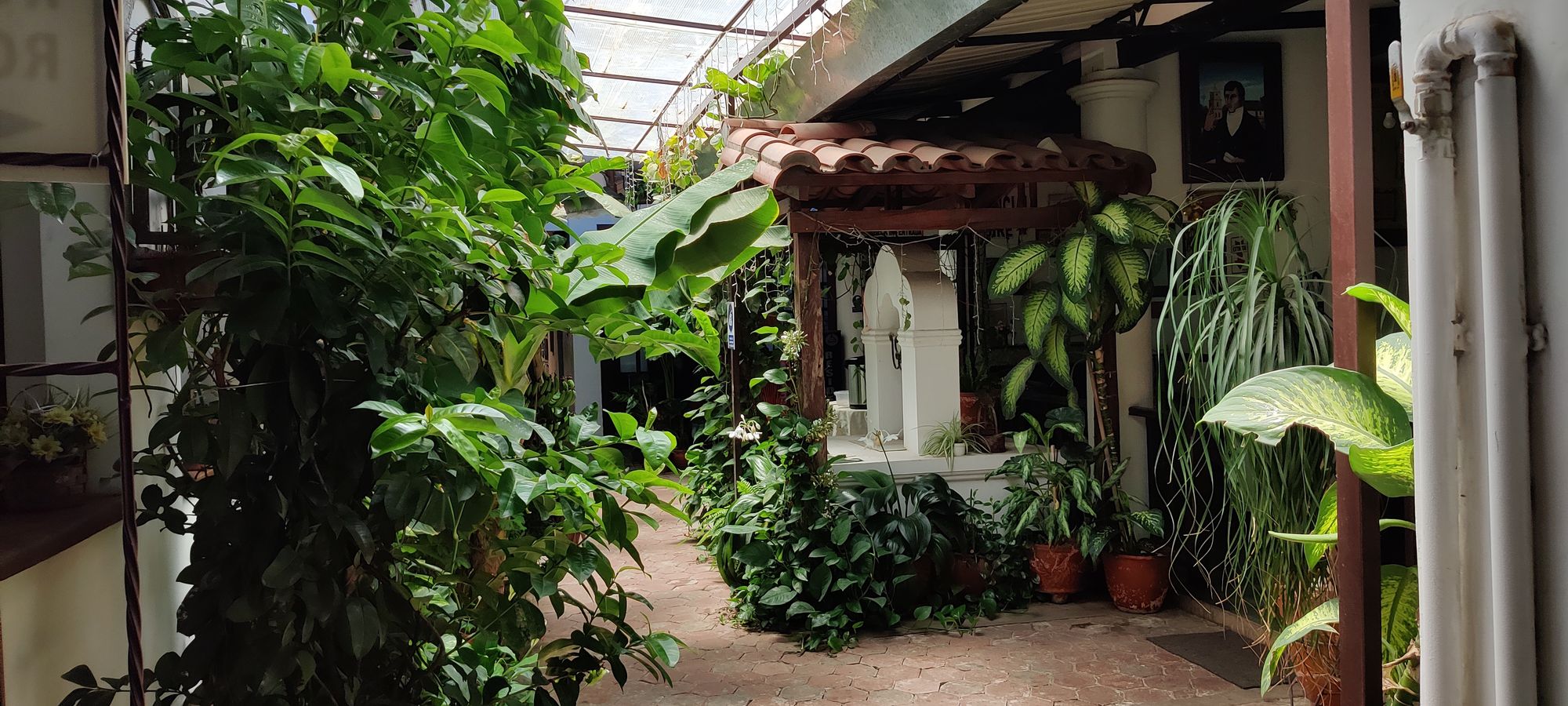
I spent approximately 5 days in Santa Cruz, where I met many friendly people, and honestly, I never felt in danger. On my last day in Santa Cruz, I purchased a ticket to Sucre, and to my surprise, I found myself on a long but comfortable journey aboard an almost brand-new coach. The trip many hours, but since I travelled overnight, I was able to sleep and save money on a hostel room. Not too bad, overall!
Sucre
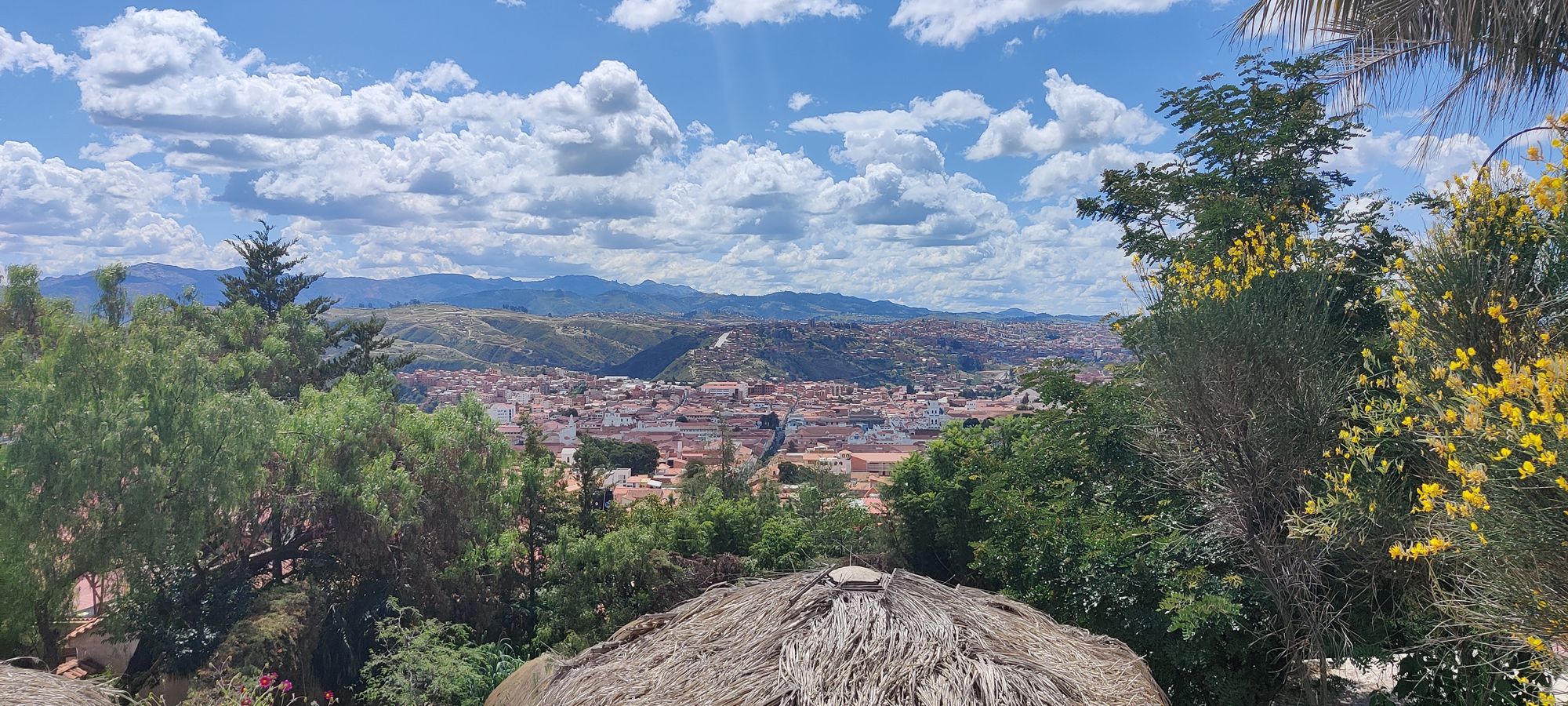
Sucre, the constitutional capital of Bolivia, is situated on the Andean plateau, halfway to Uyuni. Located at an elevation of 2810 meters, the weather in Sucre is less humid, and the views are simply breathtaking.
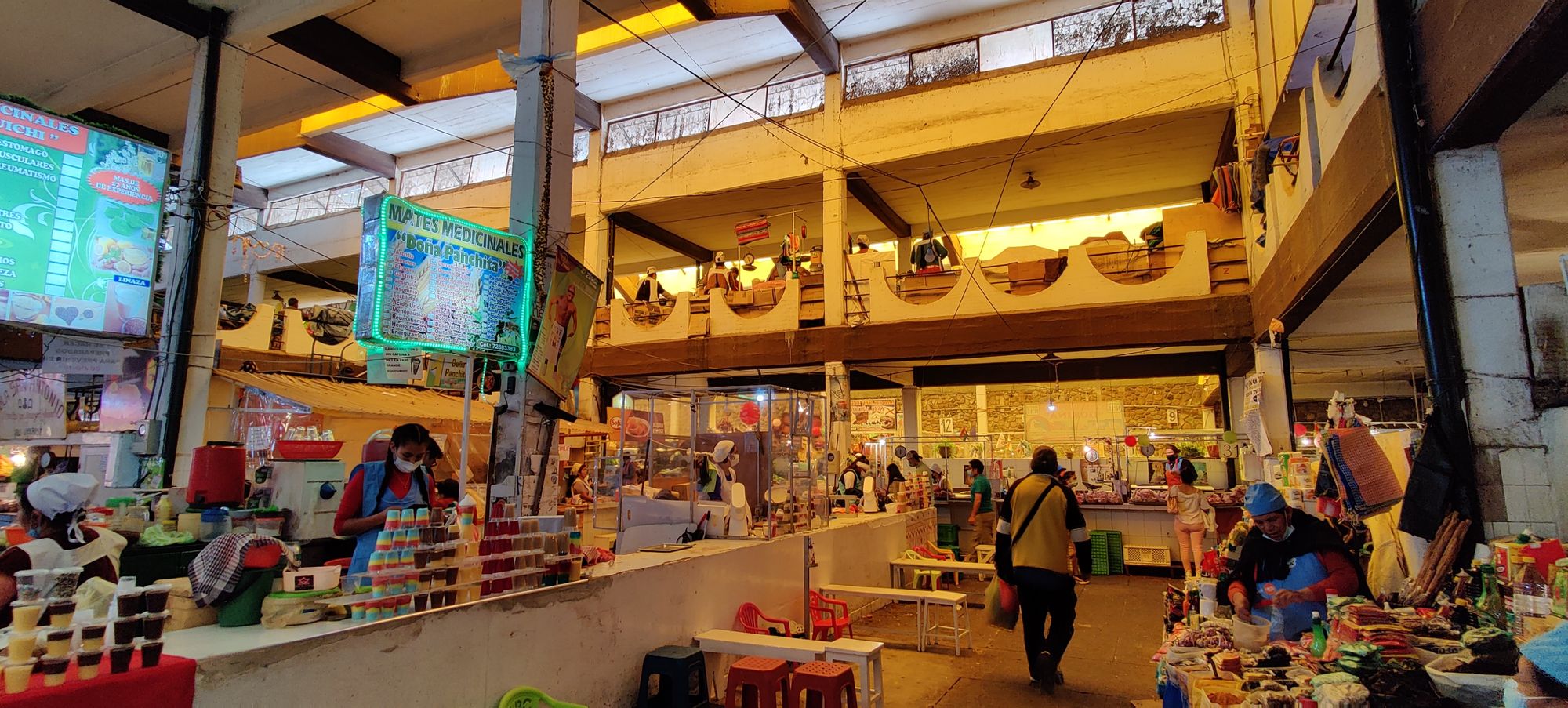
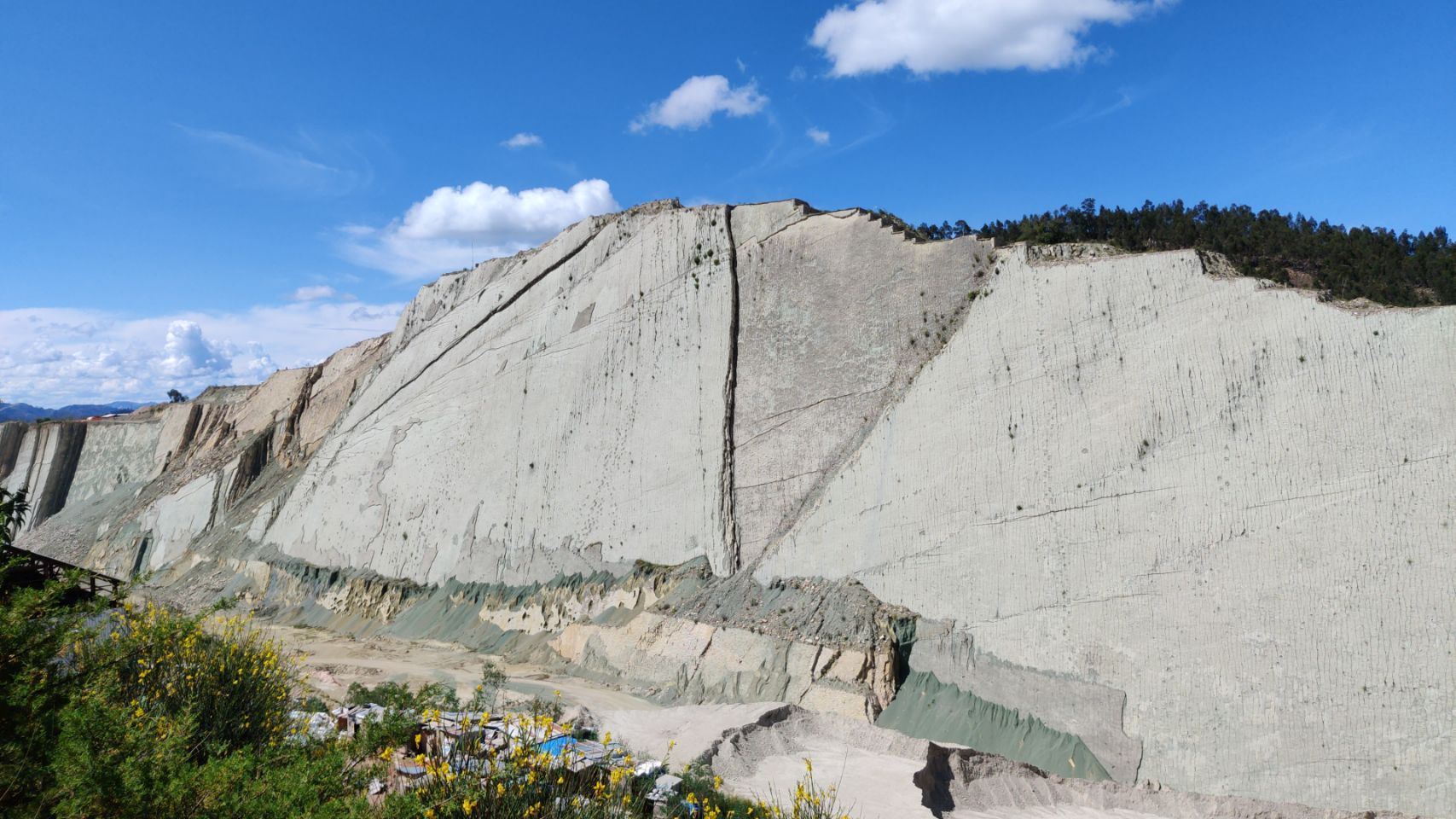
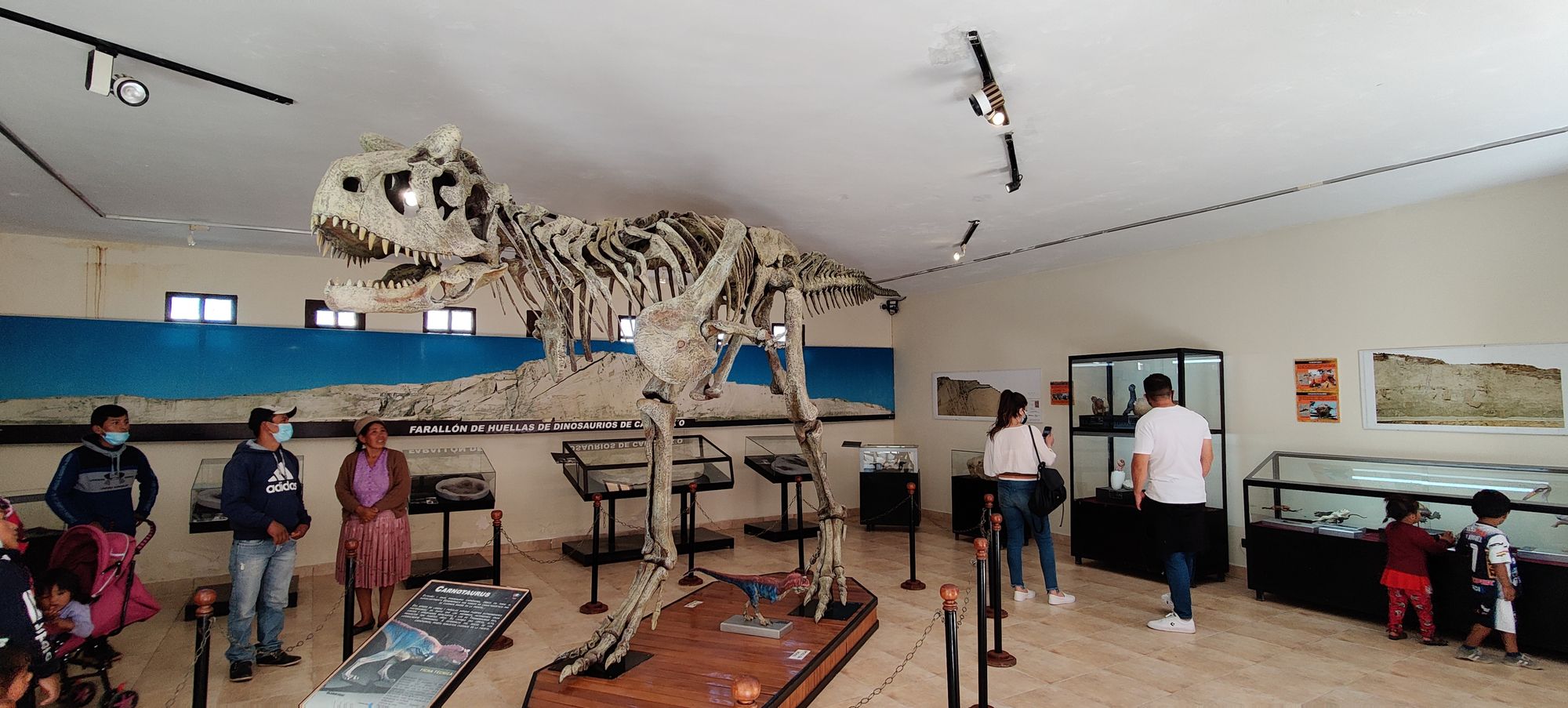
I managed to find a wonderful hostel in the center of Sucre and I had my first meal at a local market. The food market was bustling with activity, and every vendor tried to entice me to eat at their stall. During lunch, I had the pleasure of meeting Pedro. He had spent his entire life working in the fields, four hours away from his home. And although his English was basic, he was thrilled to engage in conversation with a foreigner. He took me to visit an archaeological site where a gigantic wall displayed numerous dinosaur footprints.
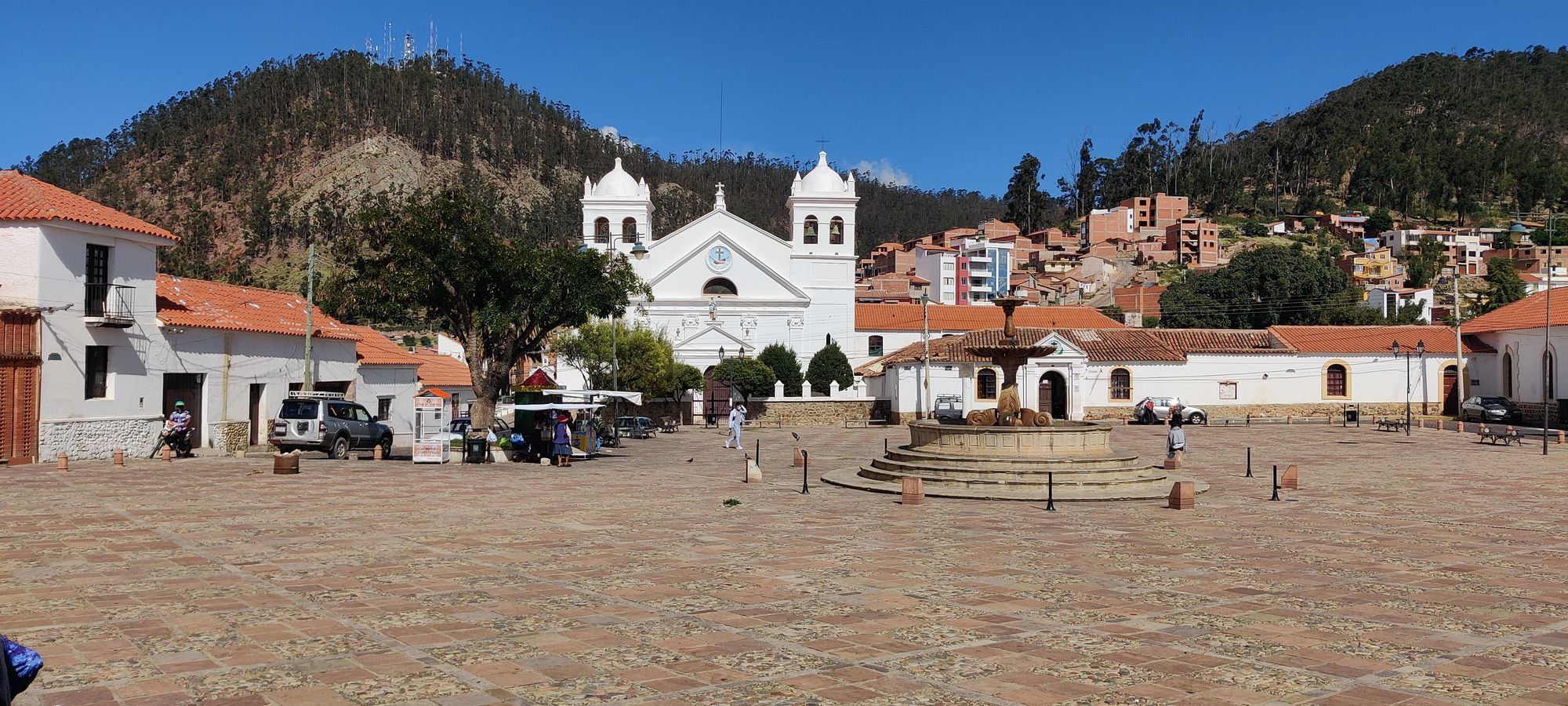
The following day, Pedro and I met again, and he played his charango for me. He mentioned that he used to play in a theatre many years ago and proceeded to perform a Quechua love song. Before departing Sucre, I visited the Treasure Museum and the Recoleta Franciscan Monastery, located at the city's highest point. As I sipped on a refreshing lemonade, I was treated to the most breathtaking view while a bunch of young students were celebrating their graduation.
Uyuni
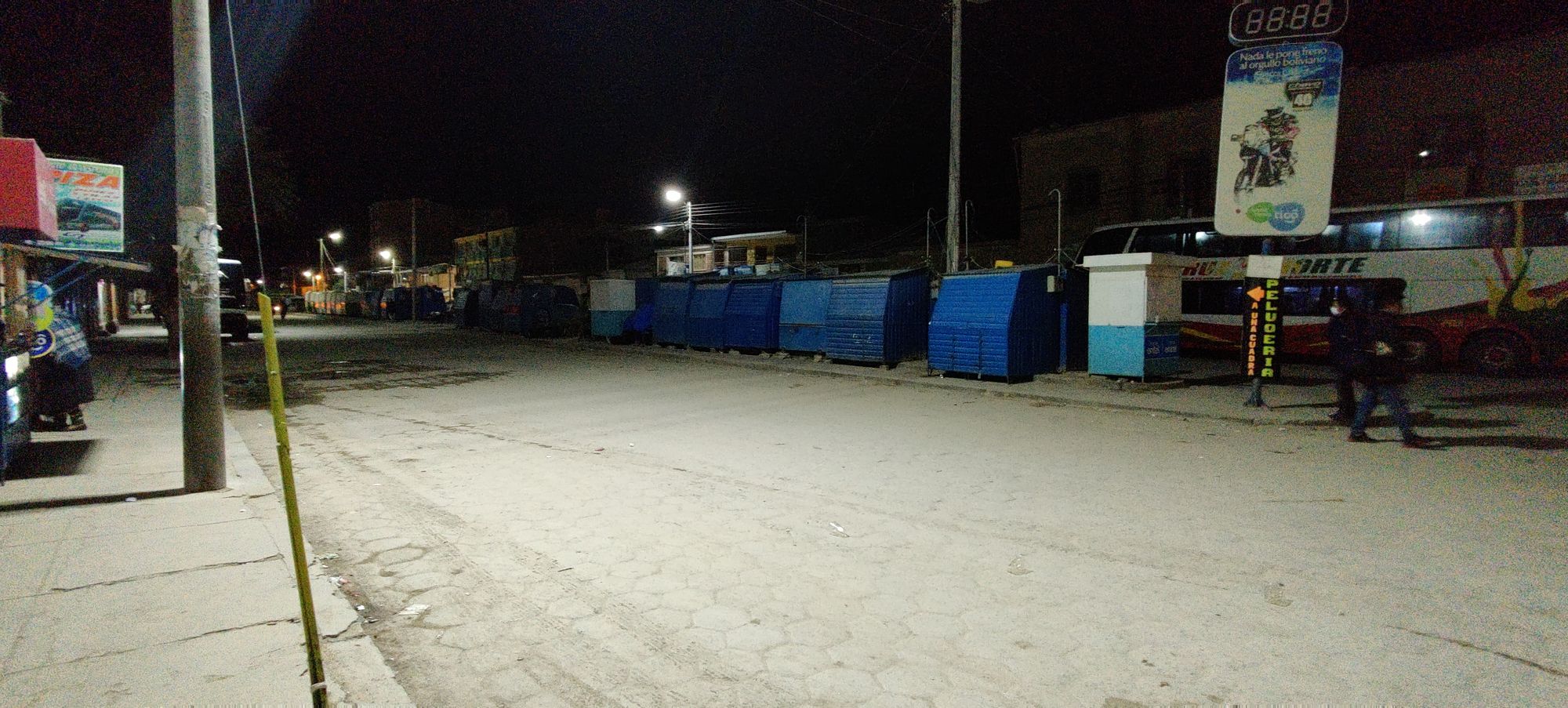
I vividly recall the mix of emotions—both a sense of fear and excitement—when the coach finally halted in Uyuni in the dead of night. As I stepped off the bus, I was immediately bombarded by numerous tourist operators vying to sell me a few nights in their hostels. Despite the ungodly hour of 5 A.M., they were relentless in their pursuit of potential customers. The sight that greeted me resembled a post-apocalyptic town.
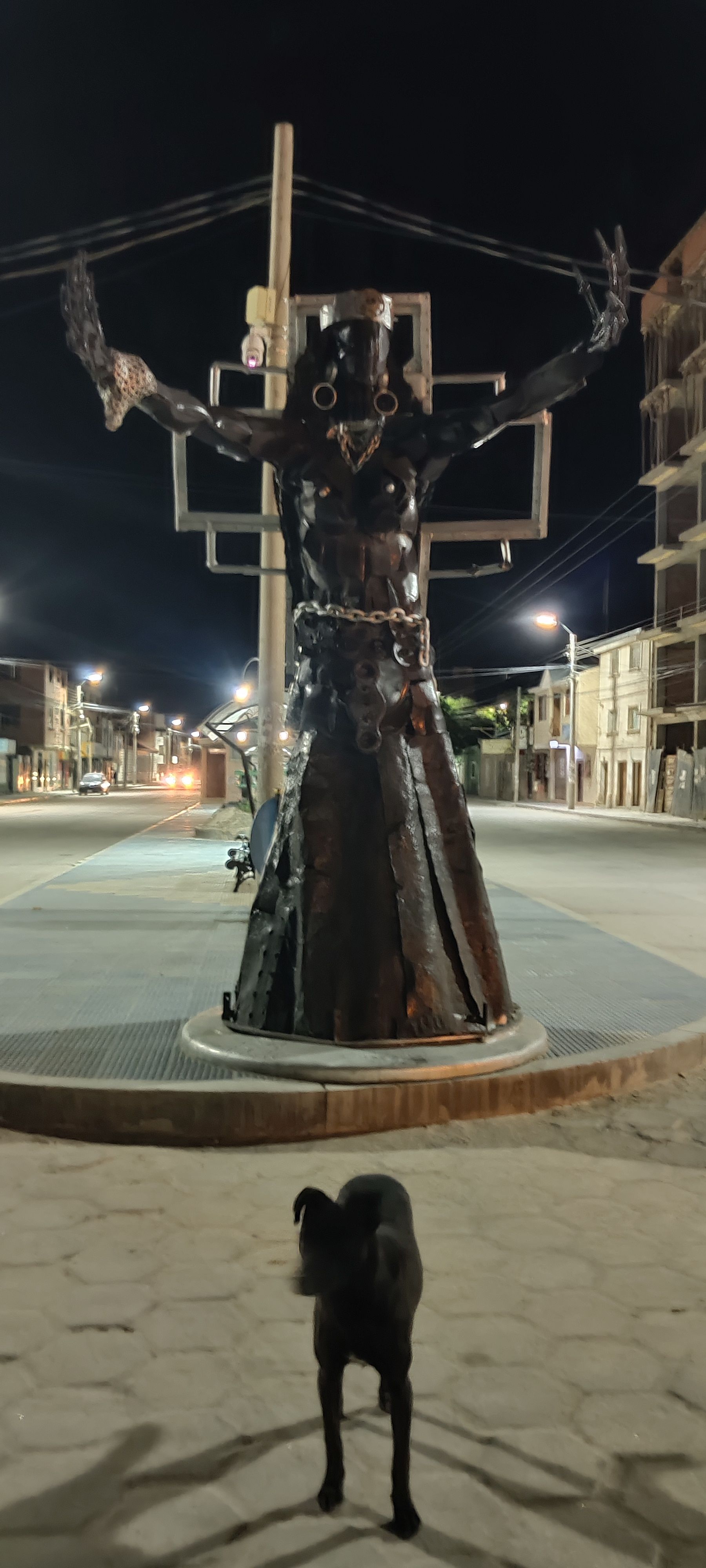
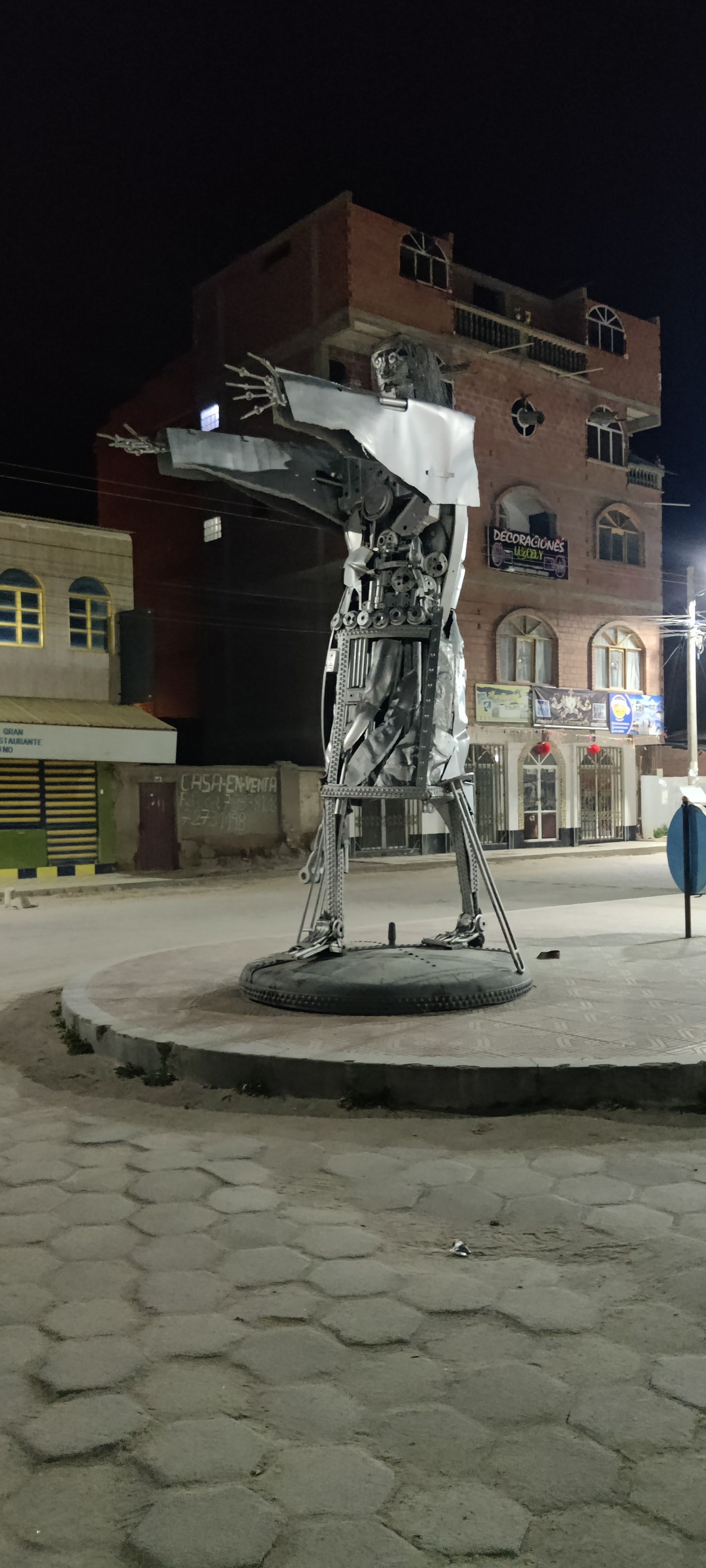
Uyuni is situated just a few miles before the desert, and it certainly shows. The air is incredibly dry, and the absence of nightlife is palpable. Many buildings appear abandoned, yet they are simply weathered and worn from the harsh, arid conditions.
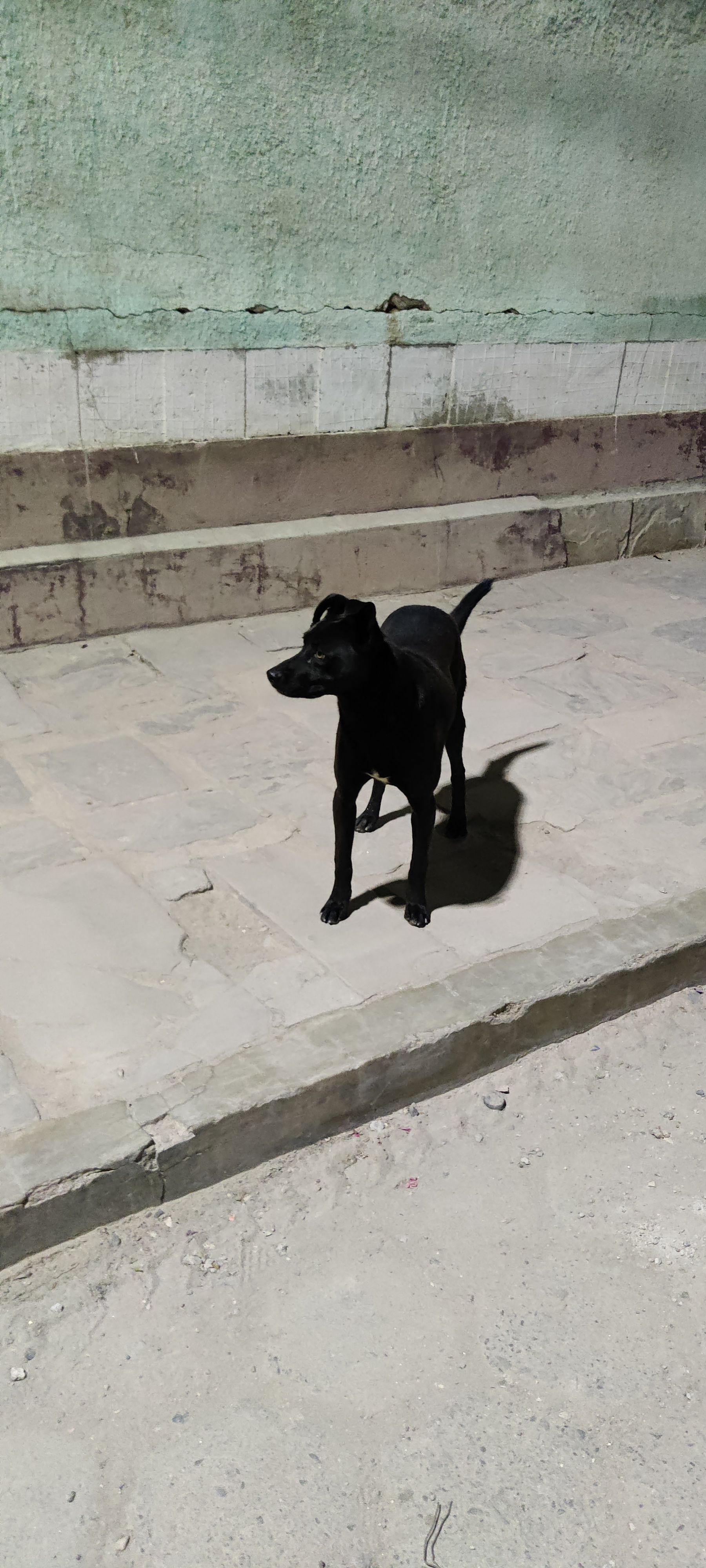
On the very morning of my arrival, I accomplished a feat by securing a 3-day trip to the Uyuni Salt Desert. The price was incredibly cheap, especially when considering the fact that I would be spending two nights in extraordinary accommodations and that the guide would take care of our meals and water supply. With the logistics sorted, I set out to explore the town and acclimate myself to the high altitude. Despite the predominantly flat landscape, Uyuni sits at a breathtaking elevation of 3600 meters, where the body starts to feel the effects of oxygen deprivation.
The 3-day trip ranks among the most awe-inspiring outdoor experiences of my life thus far. Accompanied by five other adventurous travellers, we were left utterly speechless as we approached the salt desert on the first day. The sight that unfolded before us was surreal, prompting us to snap countless pictures to capture the essence of this otherworldly place. We delighted in exploring different areas, hopping from one spot to another, each offering a unique perspective of the vast expanse. It's worth noting that the desert is so immense that it can be seen from space, and the wind orchestrates the movement of the water that pools after the rainy season, creating ever-changing patterns across the landscape.
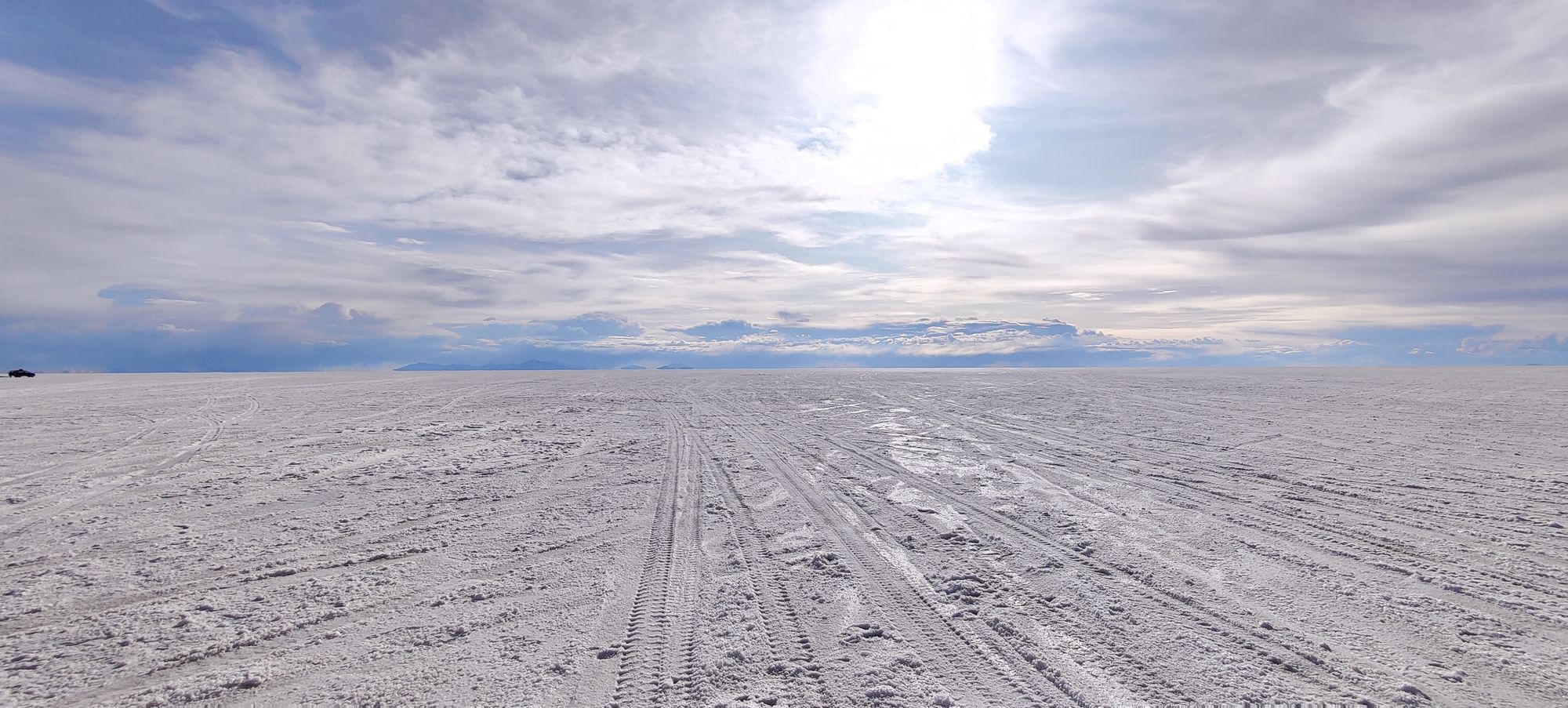
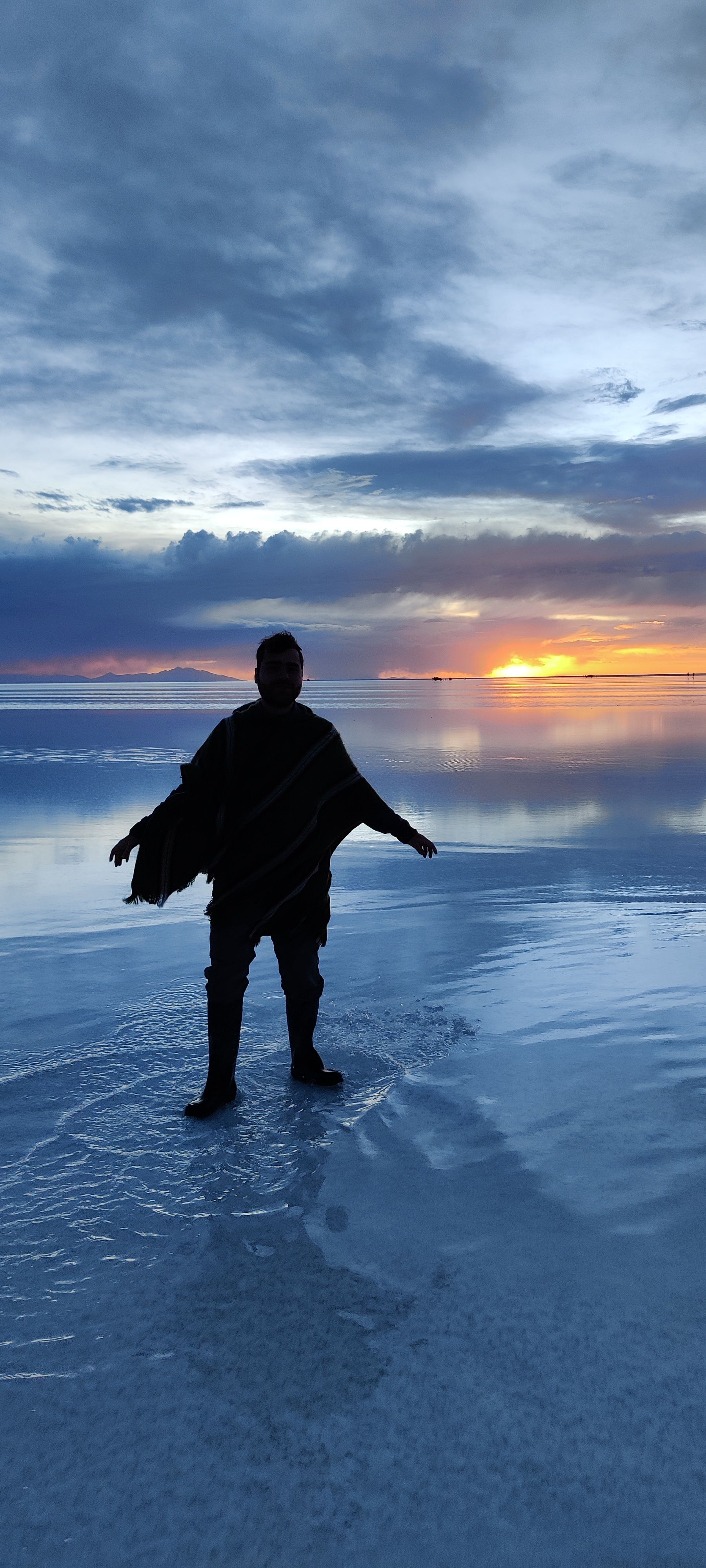
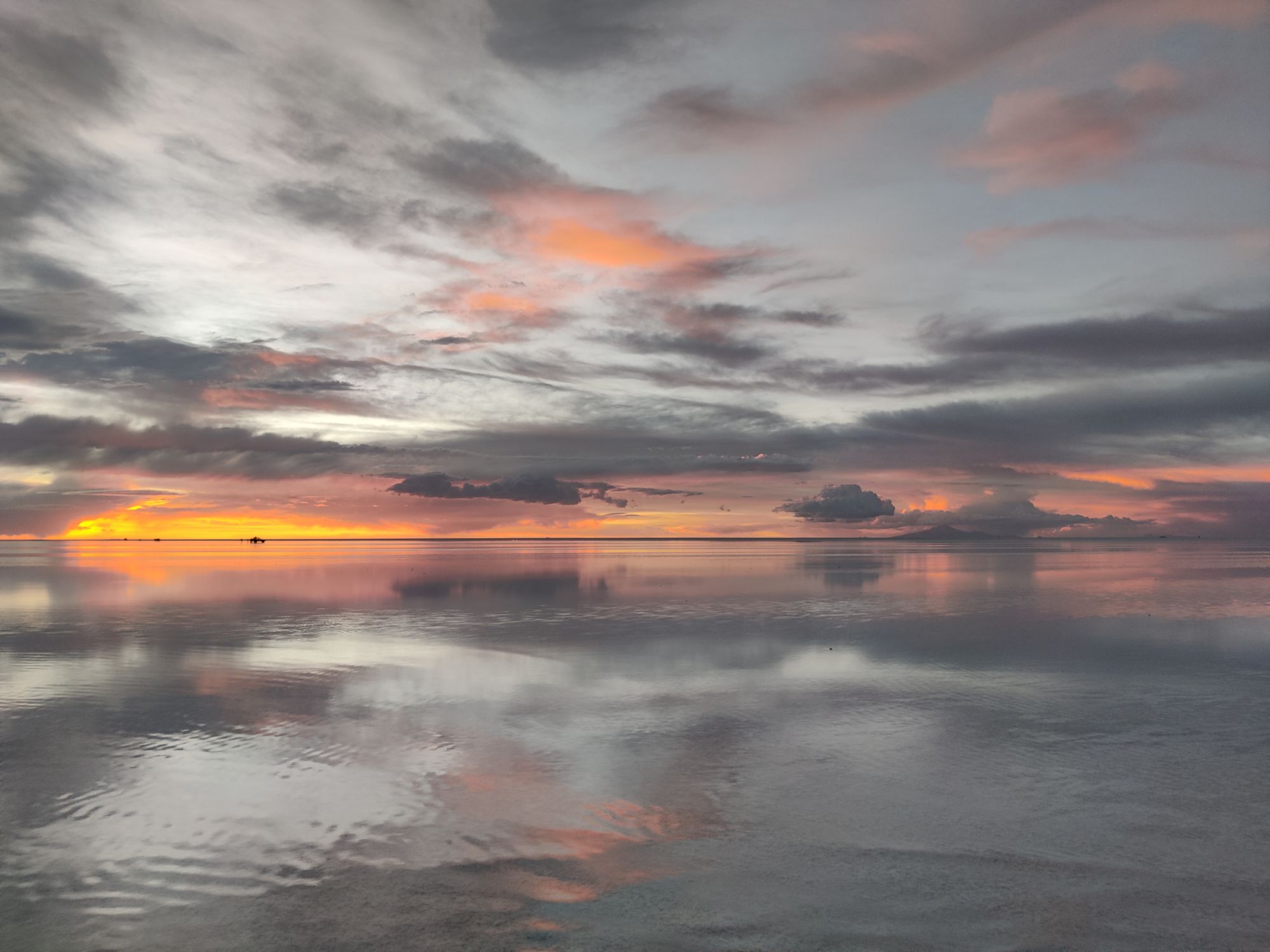
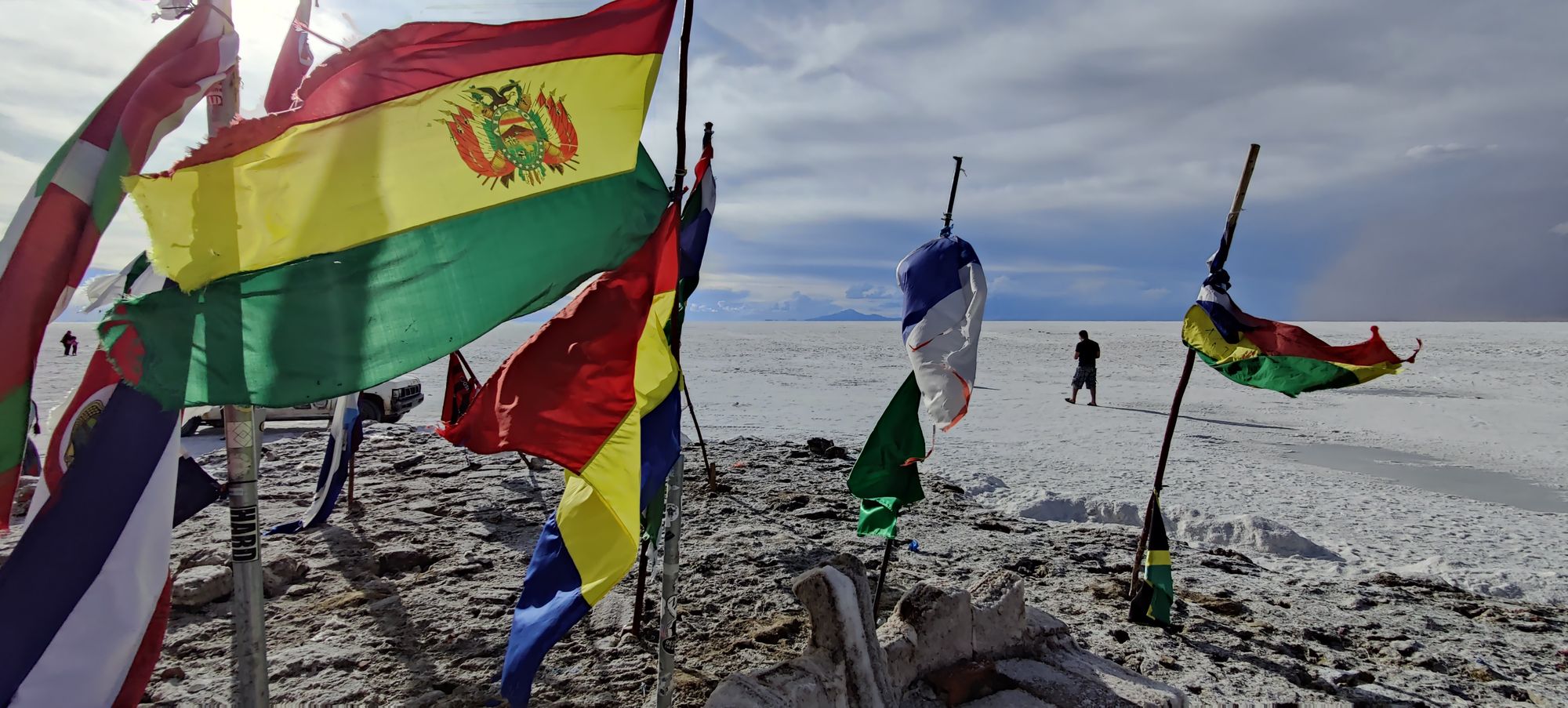
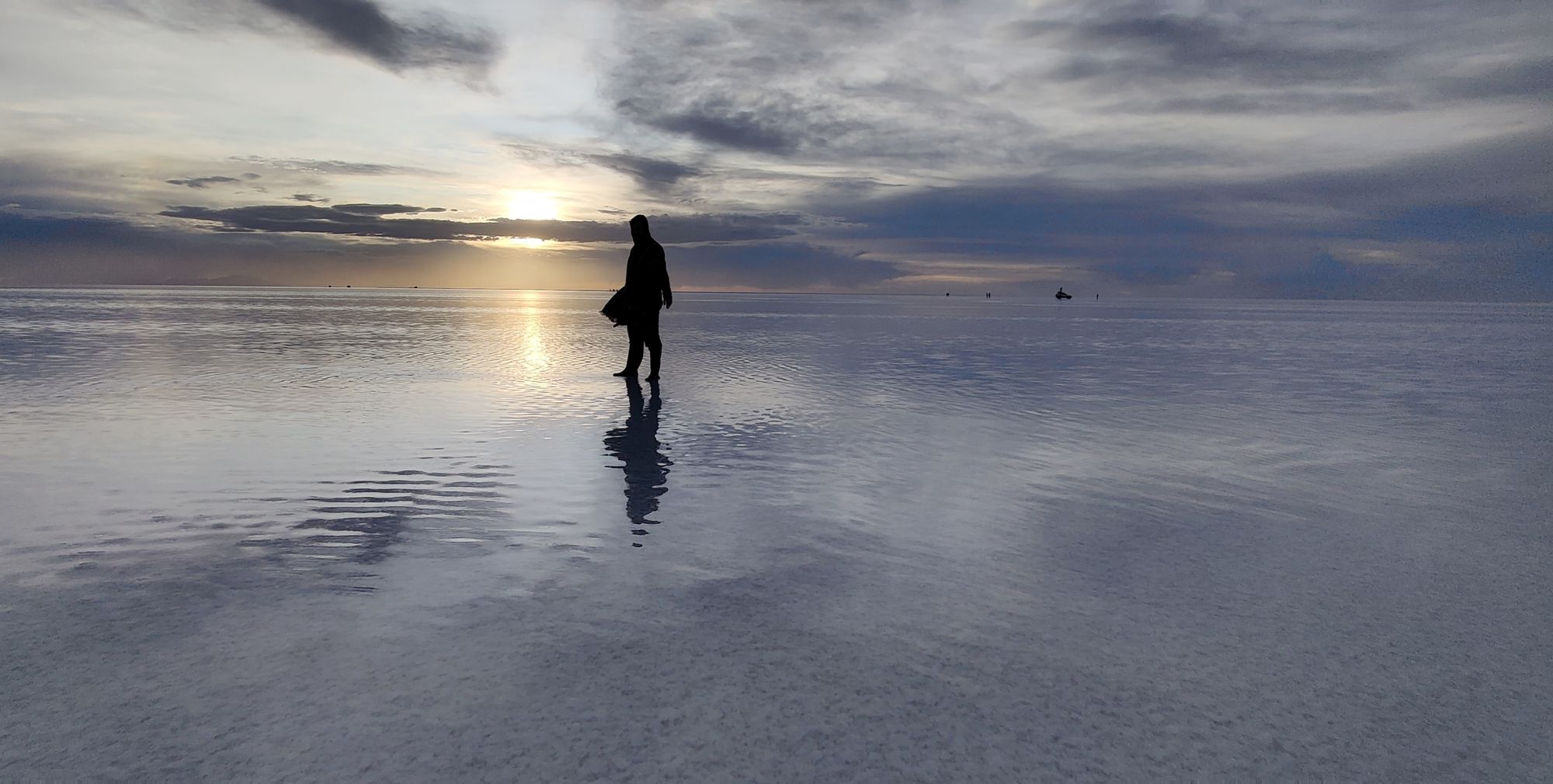
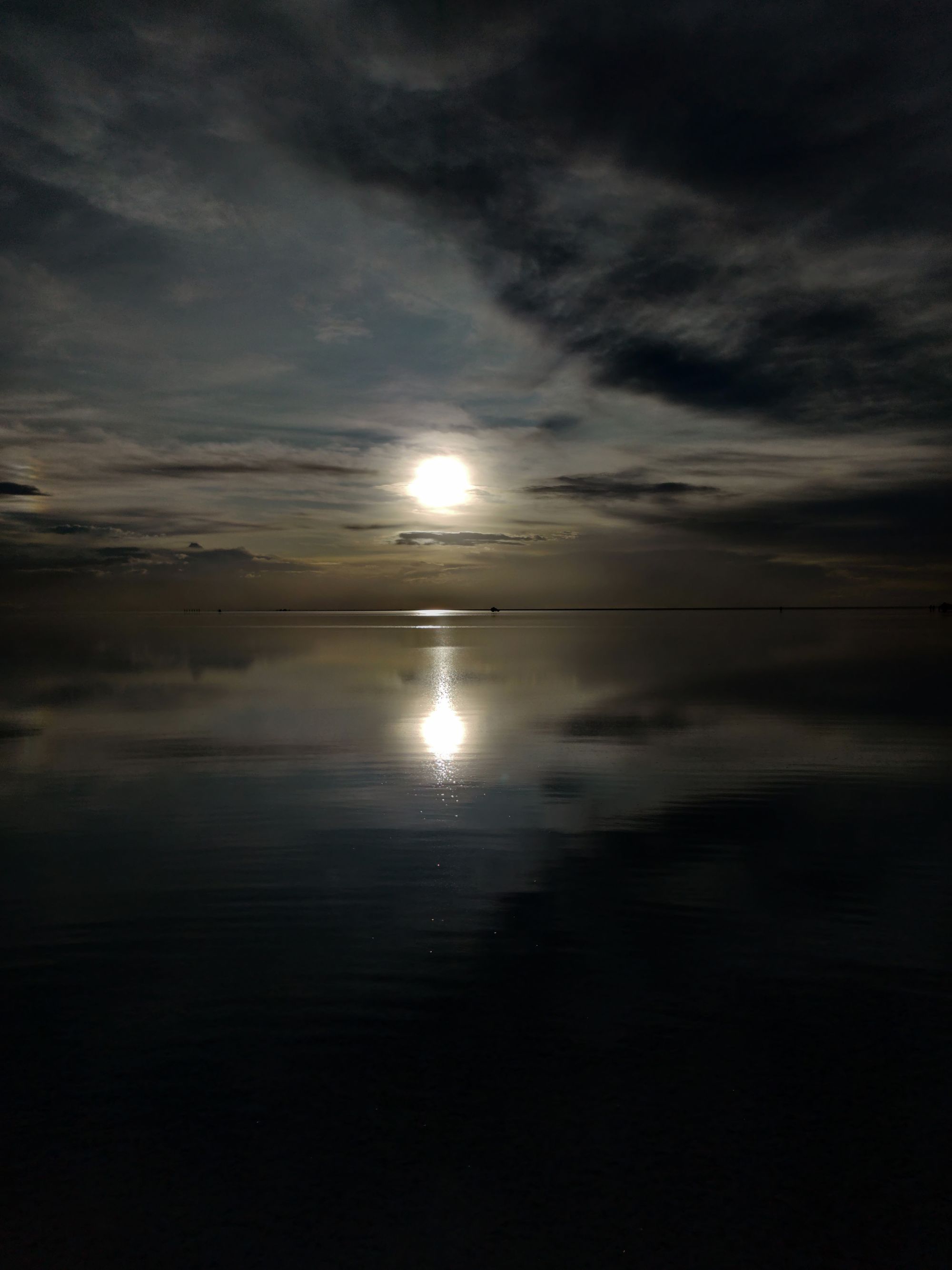
The combination of flat and waterproof terrain with the presence of water gives rise to an astonishing natural phenomenon: a breathtaking mirror effect. As the day drew to a close, we found ourselves at a truly unique accommodation: a hotel made entirely of salt.
The second day of our adventure was dedicated to exploring the lagoons that dot the arid landscape surrounding the salt desert. Prior to my journey to Bolivia, I had come across a few articles mentioning these lagoons, but I had no idea I would have the opportunity to visit them. We embarked on an extensive drive, venturing into the Reserva Nacional de Fauna Andina Eduardo Avaroa, a national park located approximately 200 km south of the Salt Desert. Our senses were treated to a magnificent sight as we beheld numerous flocks of flamingos gracefully dwelling in the shallow waters of the lagoons juxtaposed against the breathtaking backdrop of the Andean landscapes.
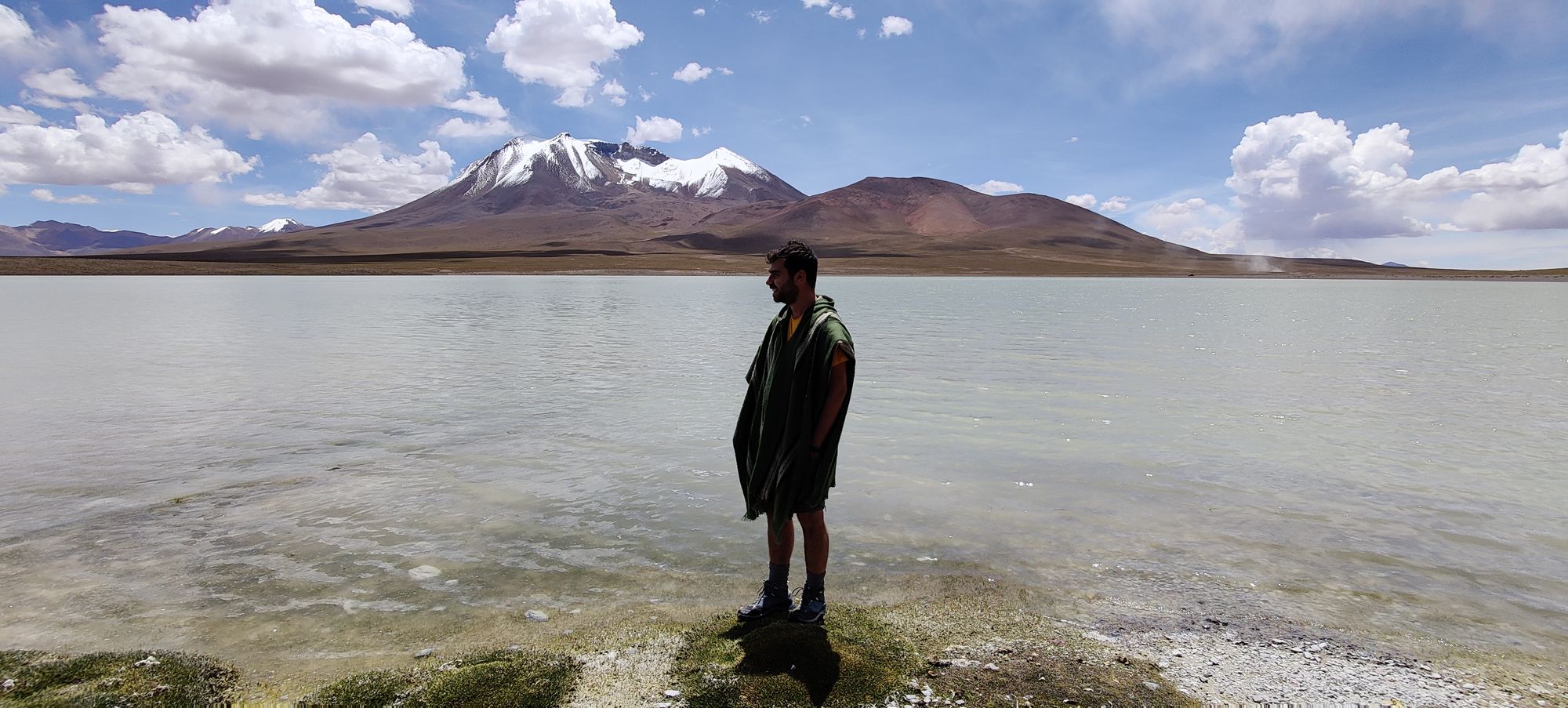
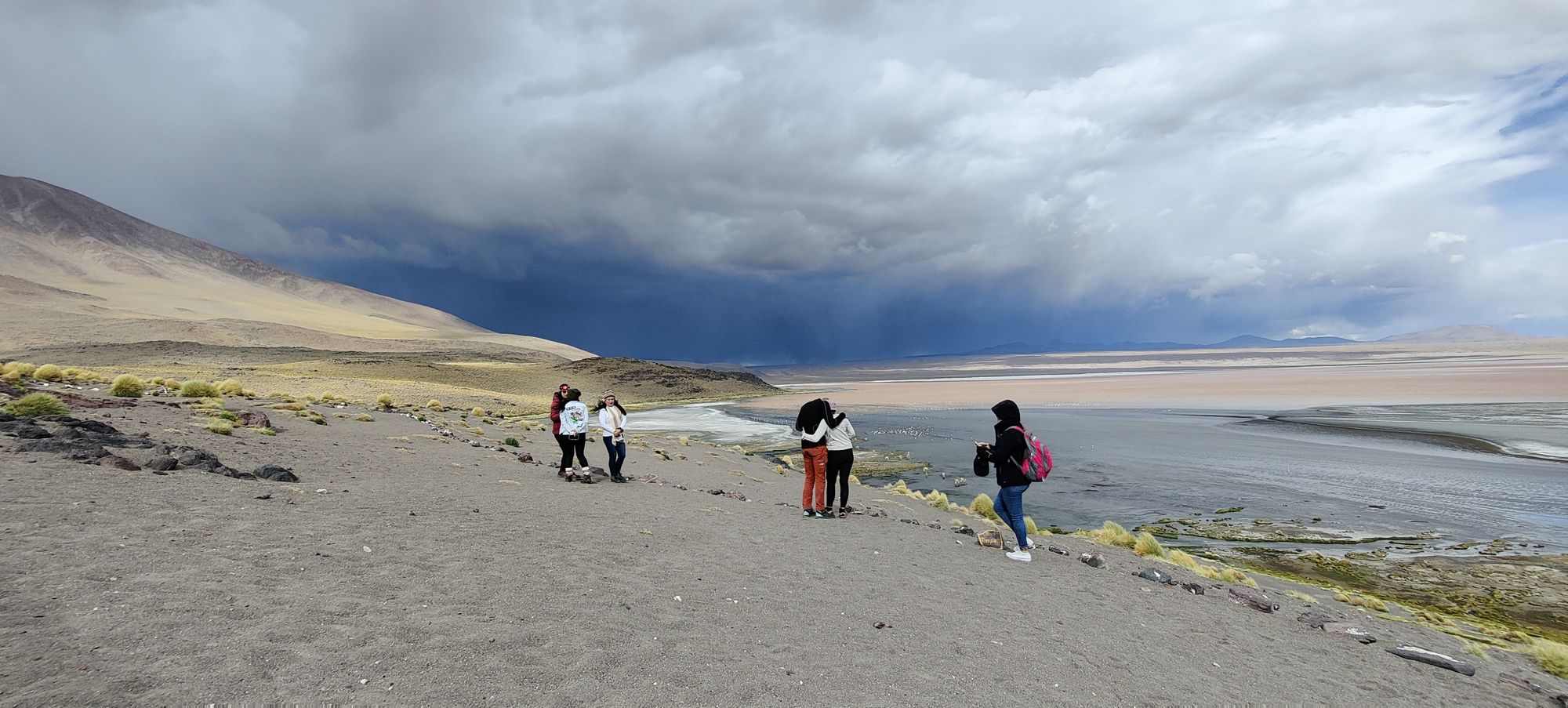
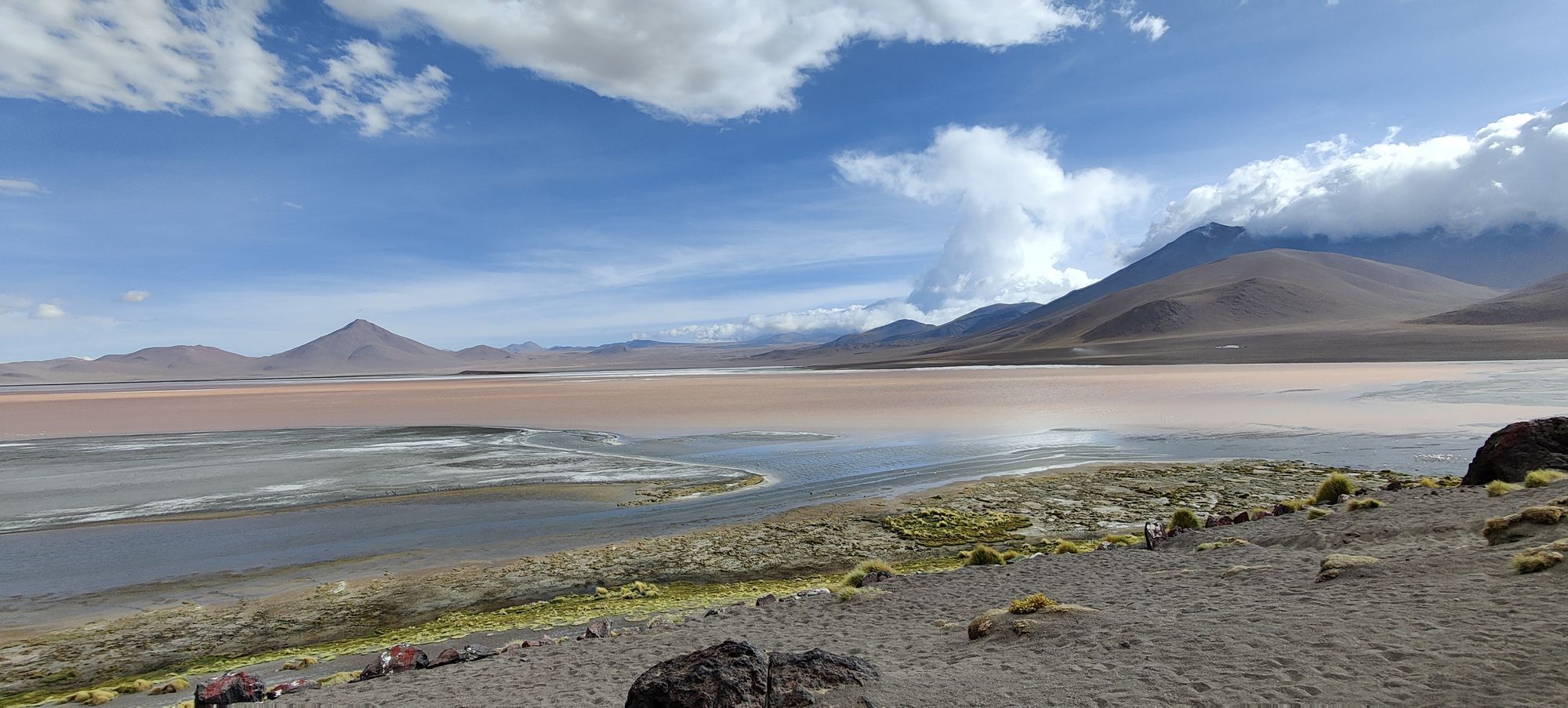
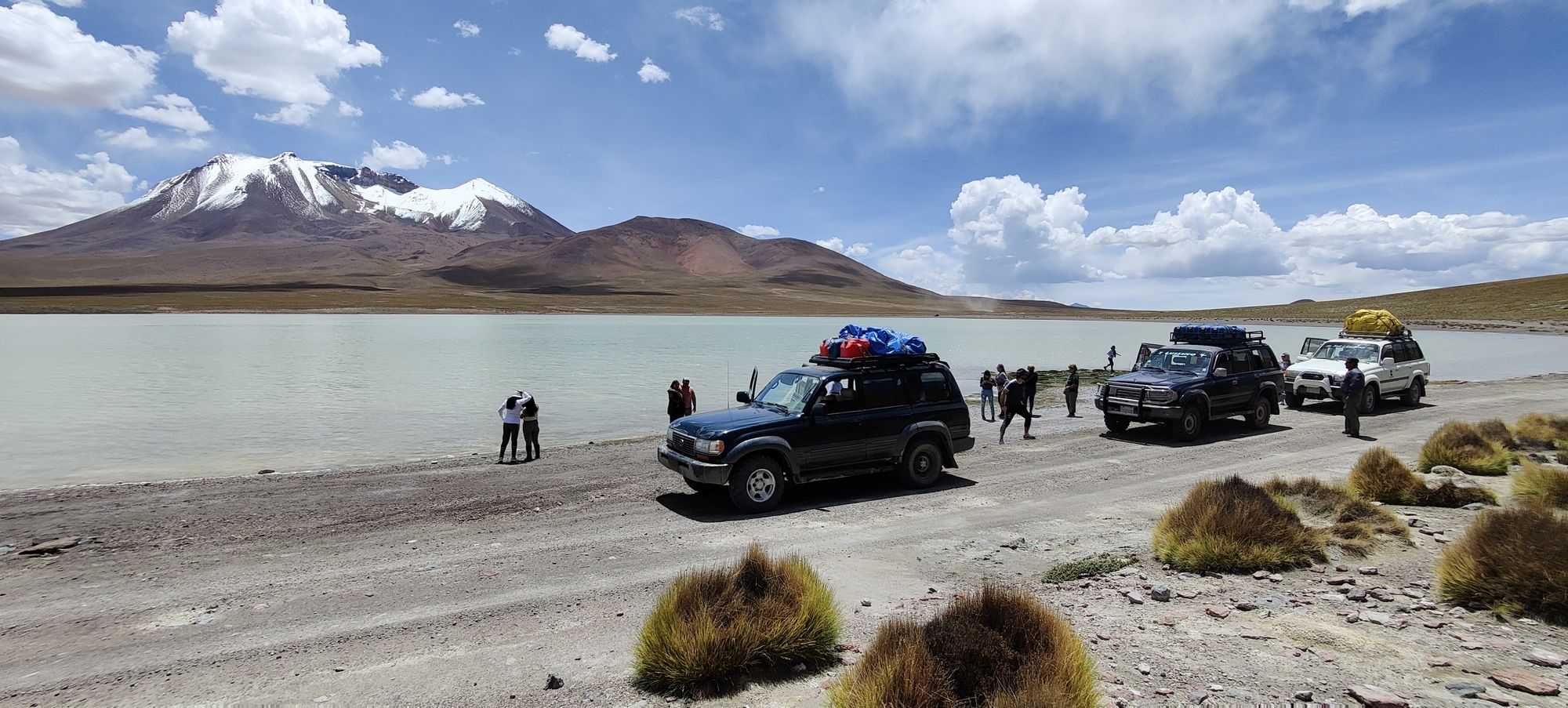
For our second night, we found ourselves at a refuge nestled in the midst of a remote and desolate location, situated at an altitude of around 5000 meters. Unfortunately, I began to feel the effects of the high altitude, experiencing a headache and general discomfort. However, despite the physical discomfort, we were privileged to indulge in a truly memorable experience: bathing in a natural thermal pool beneath a starry night sky.
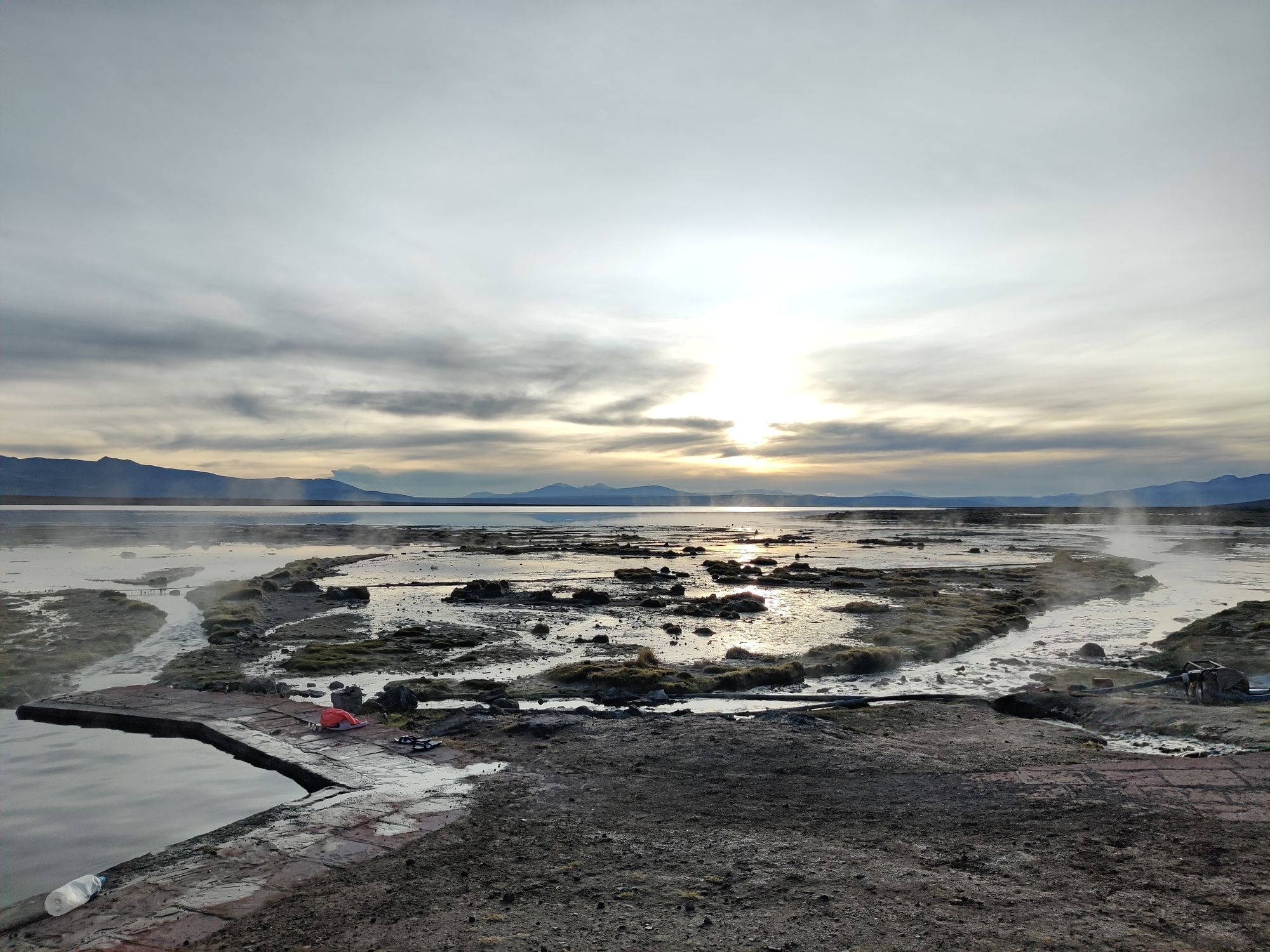
The final day of our tour proved to be just as captivating as the previous ones. The journey continued as we traversed the Salvador Dali desert, a magnificent expanse situated at an impressive altitude of 4660 meters. Its surrealist landscapes echoed the artistic essence of the renowned painter. At last, we had a stop at the stunning Laguna Negra, adorned with graceful alpacas grazing nearby.
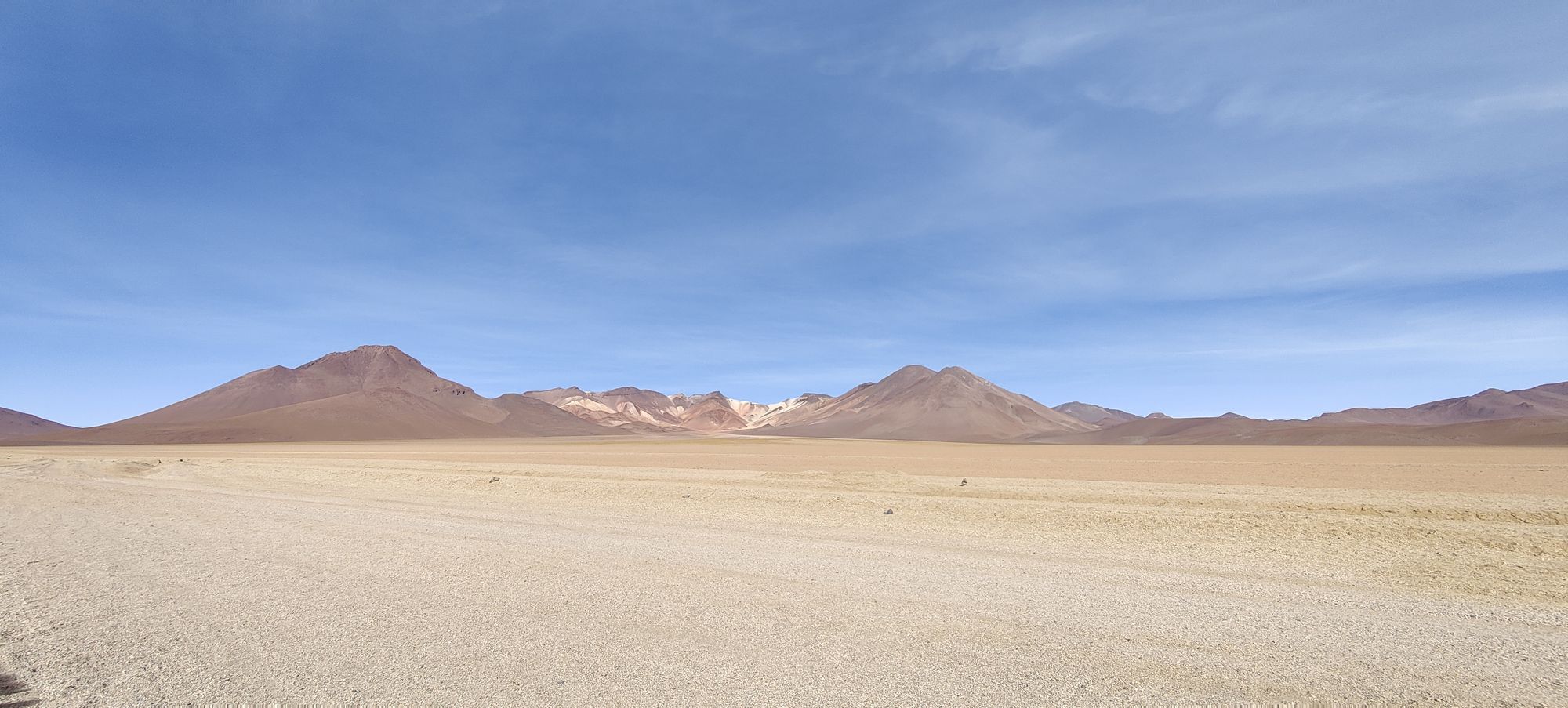
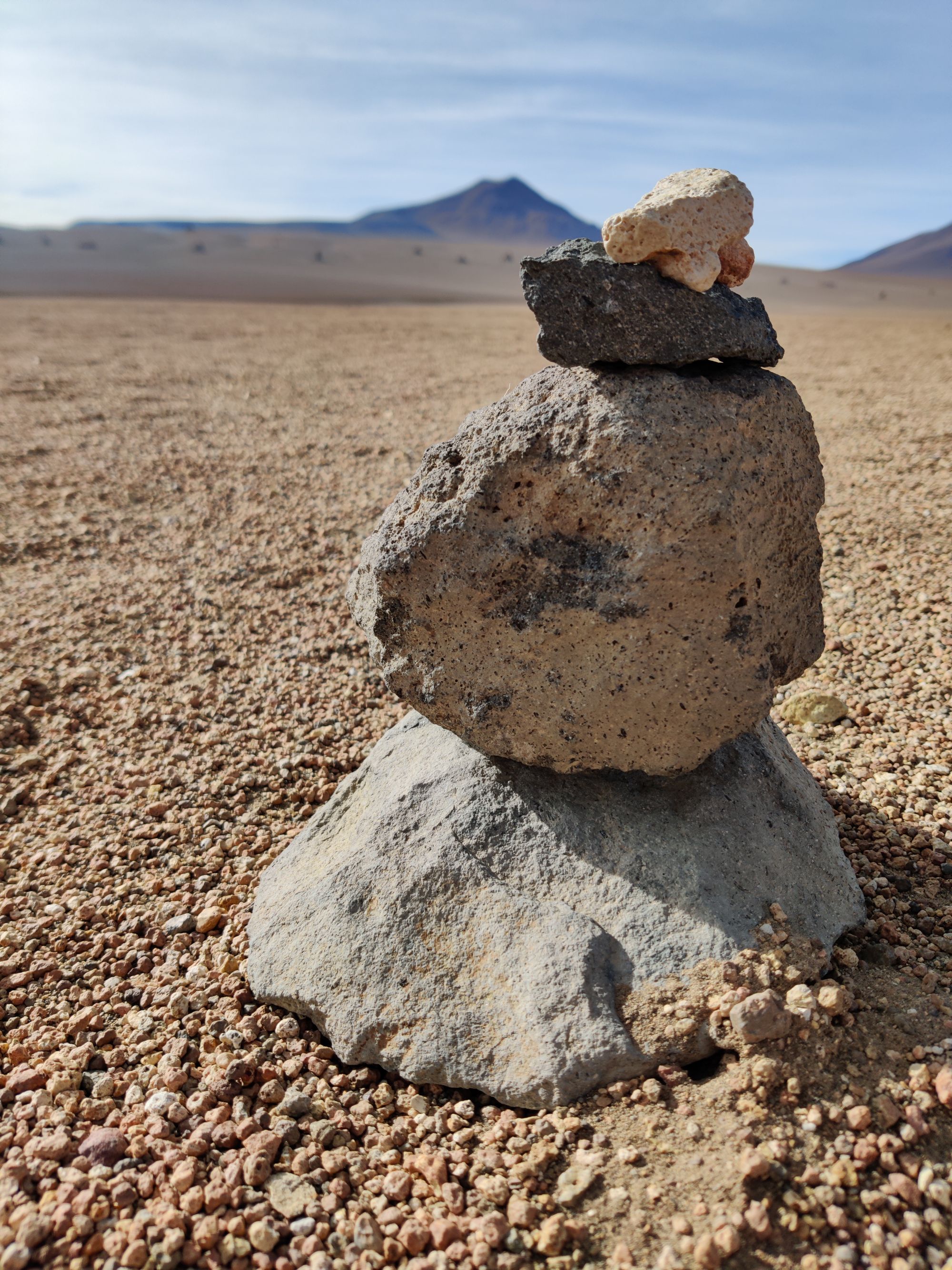
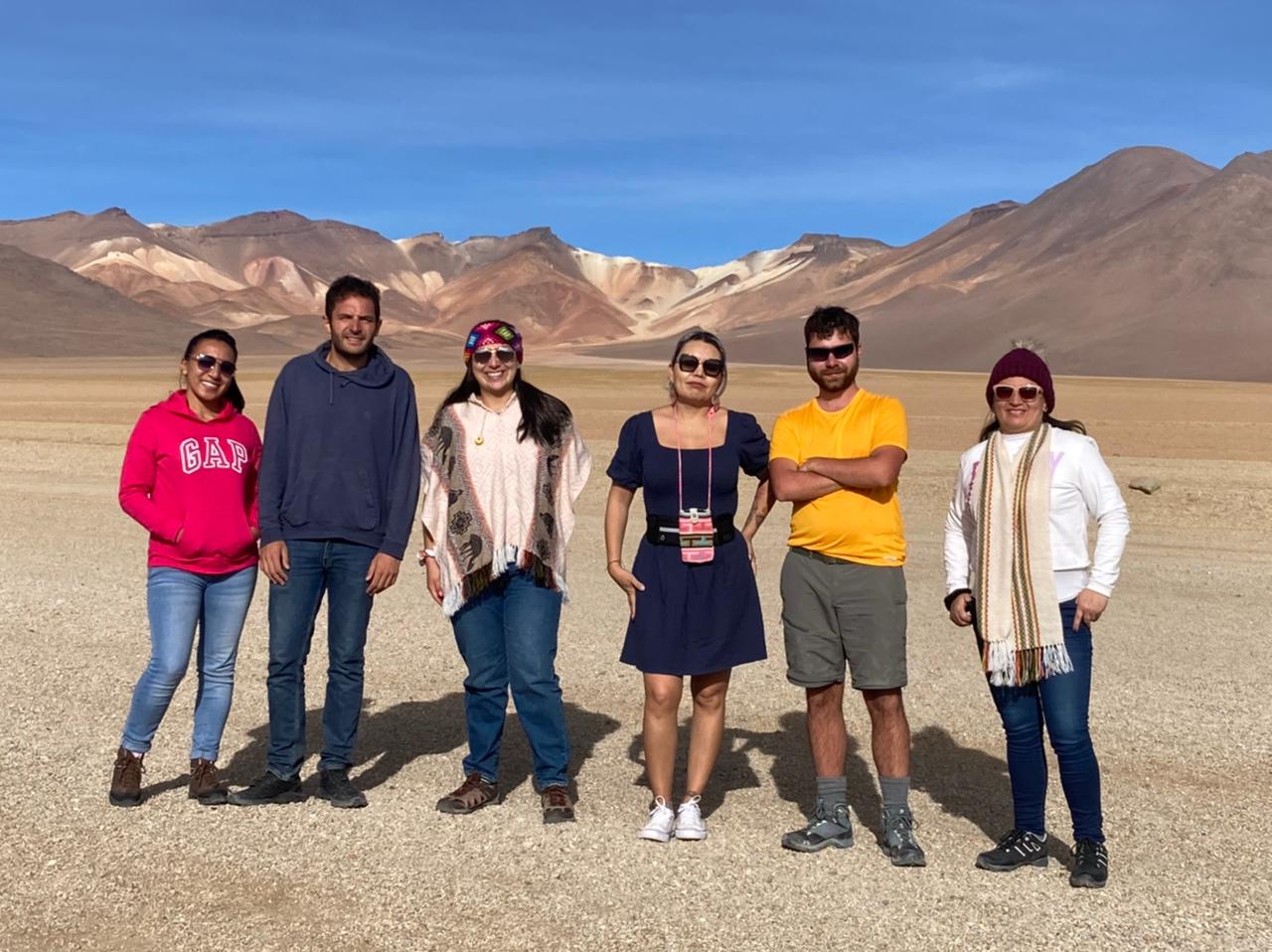
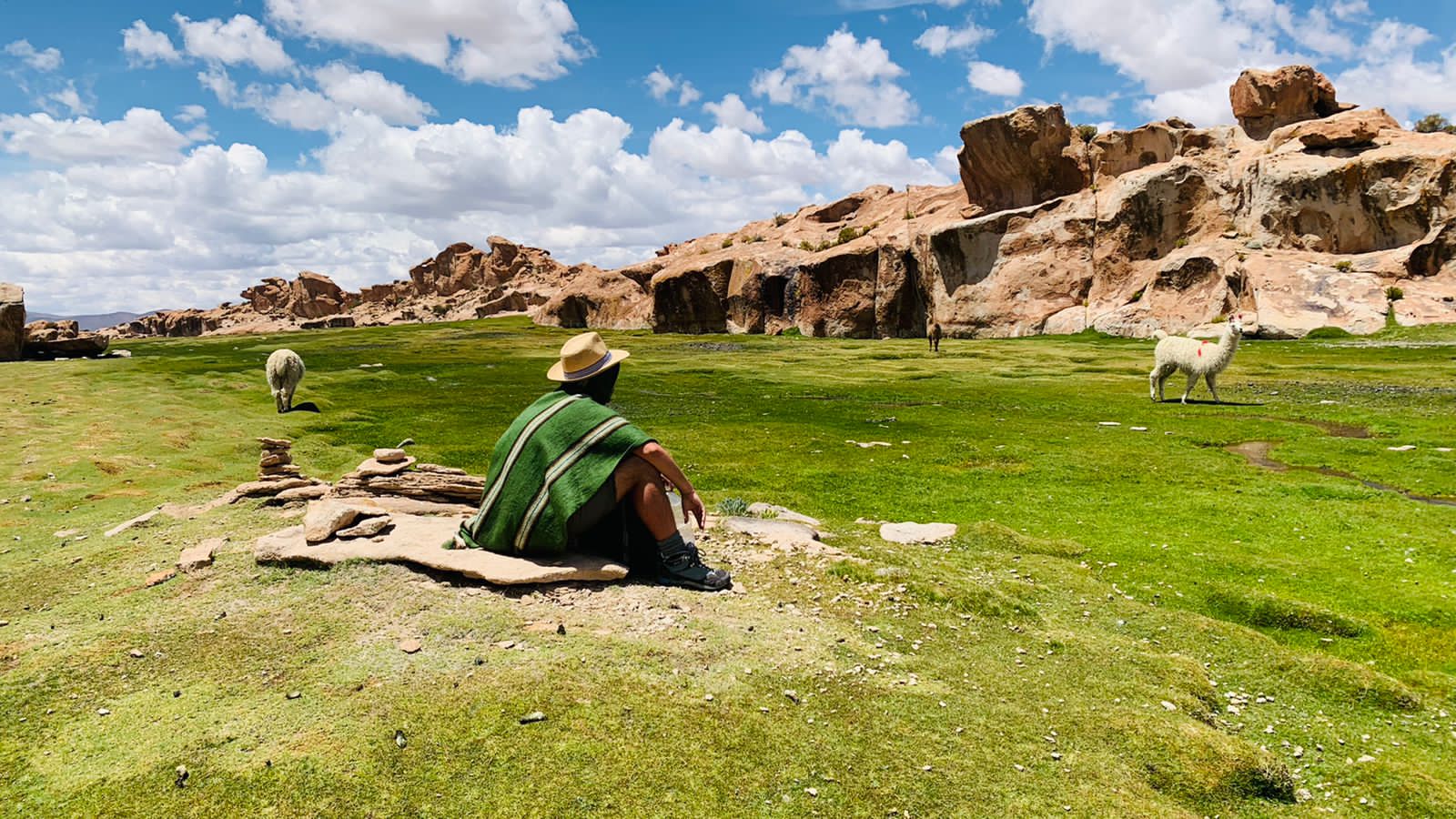
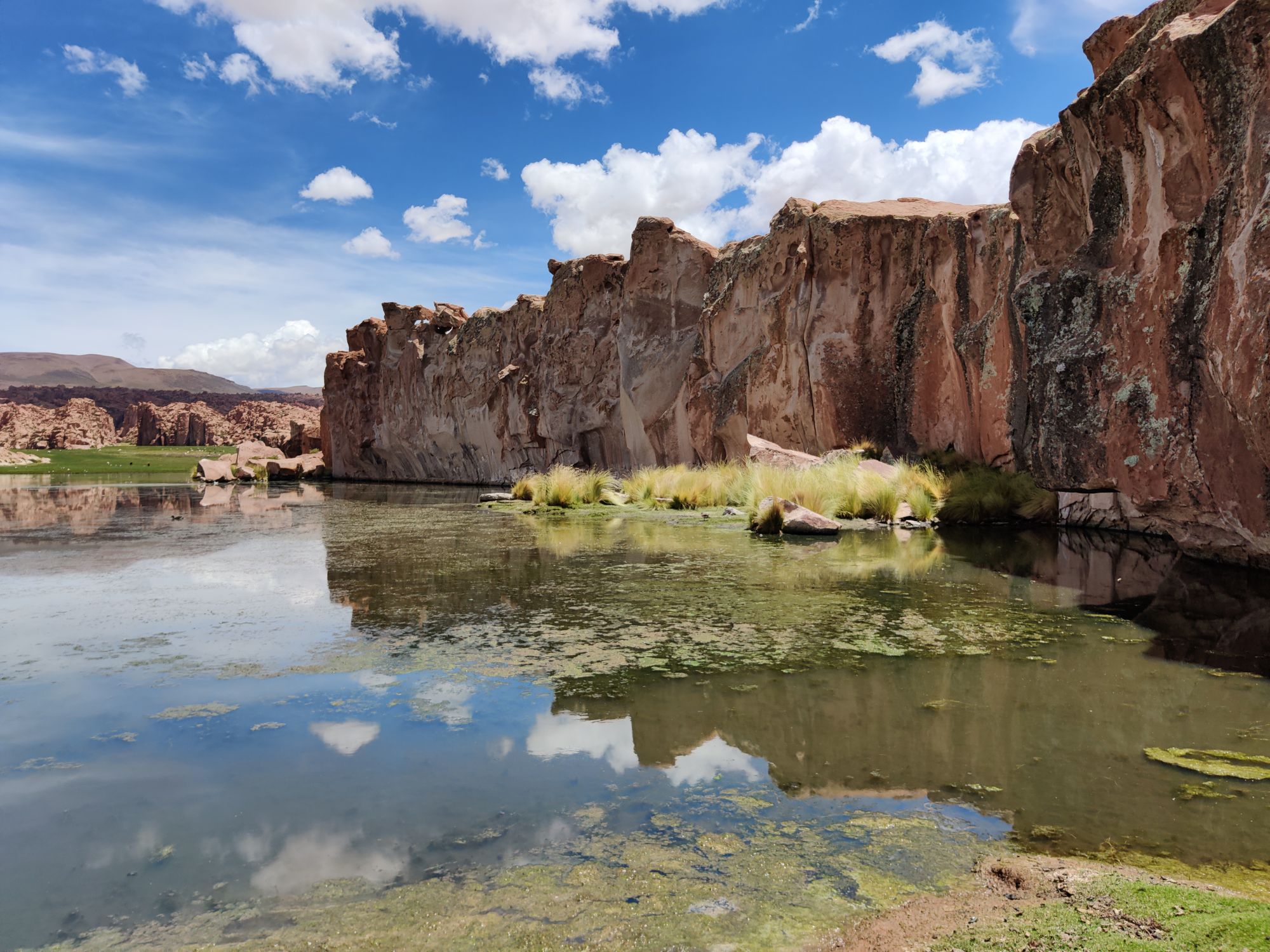
As we made our way back to Uyuni town, the exhaustion from our three-day desert expedition began to take its toll. Yet, despite our weariness, our eyes were filled with the memories of an extraordinary journey through an alien beauty.
Huayna Potosi
The final stop on my itinerary was La Paz and the Cordillera Real. Upon my arrival, I didn't have any trips booked yet, as I knew it was crucial to acclimatize to the altitude first. La Paz is often referred to as the highest capital in the world, with its elevation reaching 3640 meters. Consequently, I decided to spend a couple of days enjoying the city, experiencing its unique public transportation system, the Teleferico, and embracing the vibrant nightlife that I had been missing. I took long walks to assess my acclimatization and dedicated an entire day to exploring El Alto, the highest neighborhood in La Paz, which sits at 4150 meters. From there, I could also admire the majestic Huayna Potosi, the mountain I had chosen for my upcoming climb. It was a truly heartwarming moment to witness its grandeur firsthand, especially after reading numerous articles about thrilling expeditions.
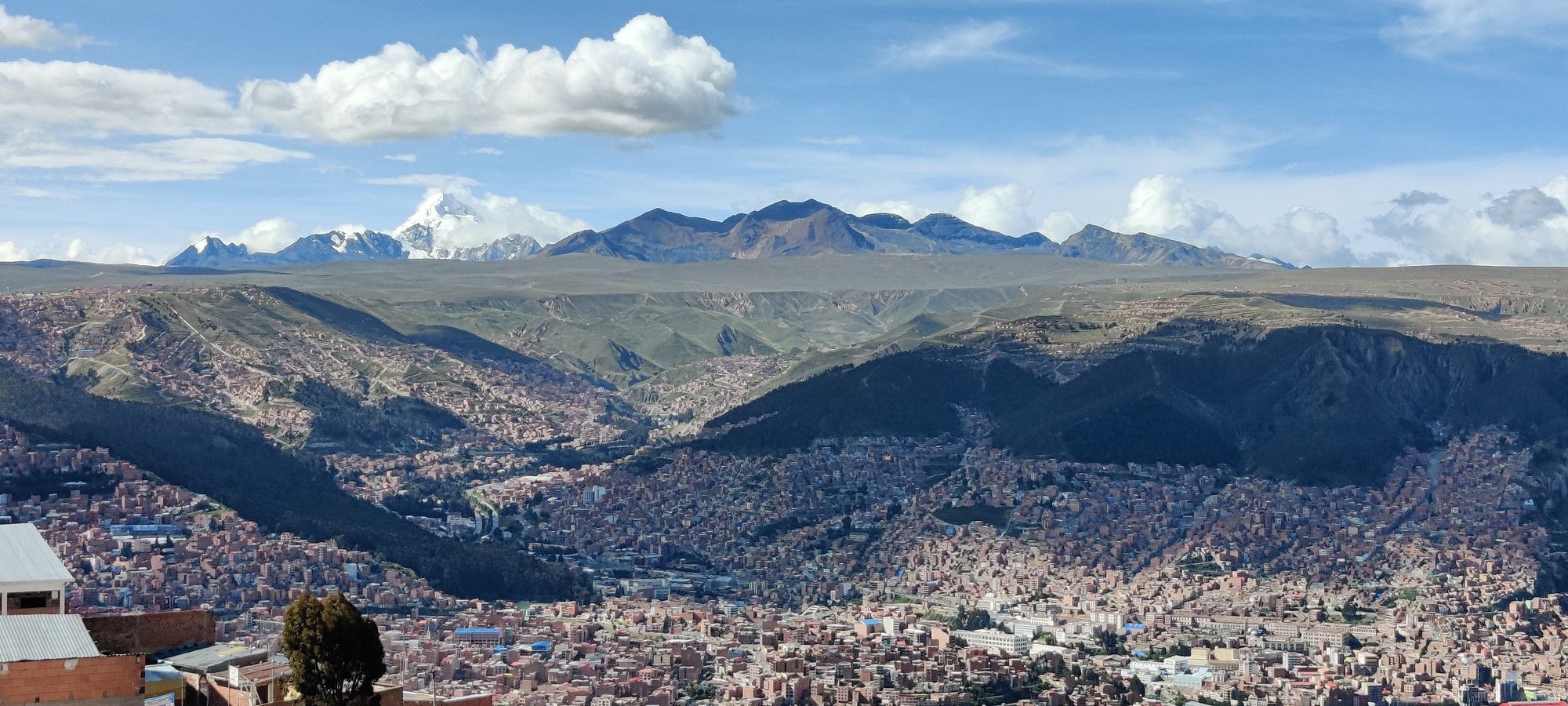
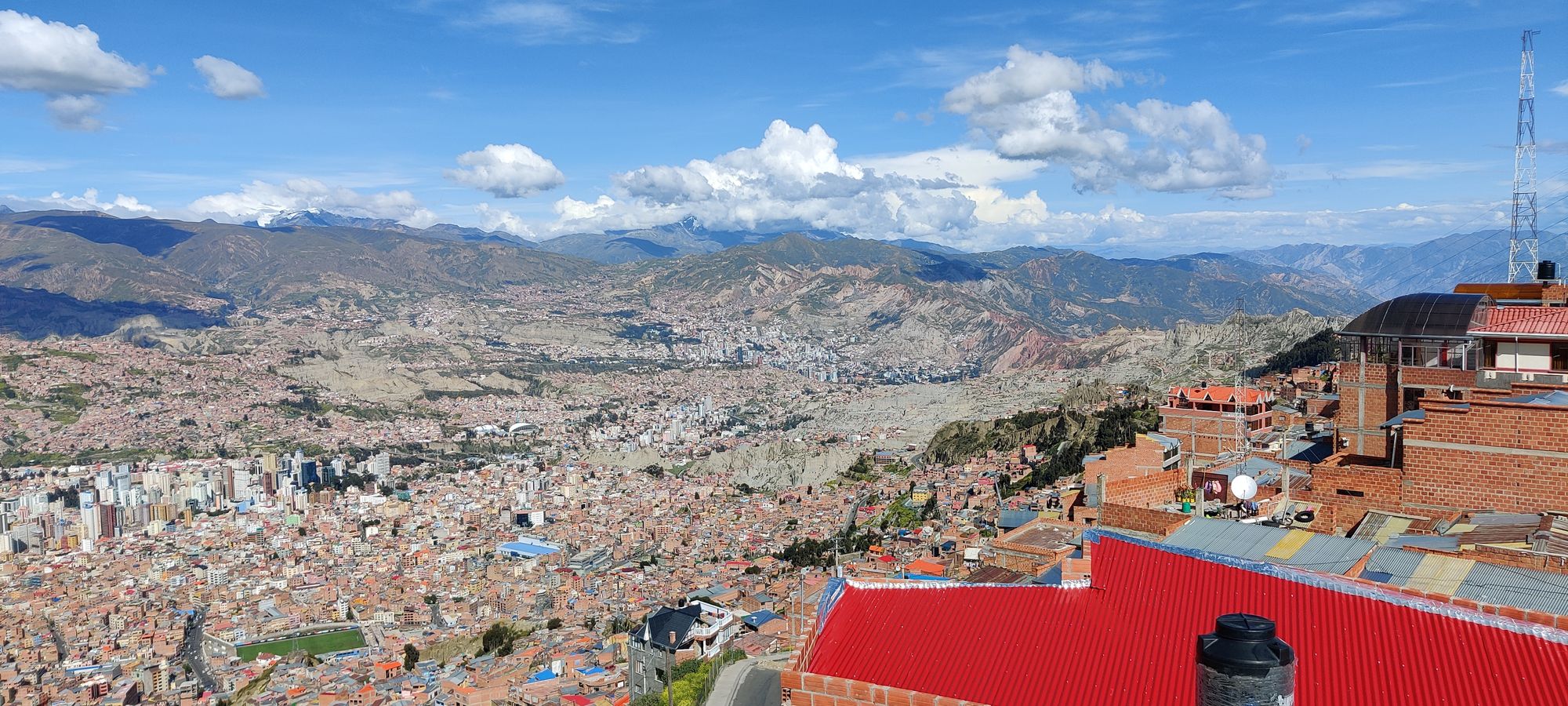
After a week of anticipation, I finally set out on my long-awaited adventure to conquer the summit of Huayna Potosi. In the morning, accompanied by my guide, we departed from the agency in a small van and made our way to the base camp situated at an elevation of 4800 meters. As we reached the camp, I couldn't ignore the slight feeling of sickness that had come over me. Even simple physical activities, like taking a walk, had become noticeably more challenging.
Despite the physical difficulties, I couldn't help but appreciate the breathtaking landscape that surrounded me. In the afternoon, I eagerly participated in my first ice wall climbing experience. While it wasn't excessively dangerous, it served as a tutorial, allowing us to learn essential techniques that would be crucial during the final day of climbing. The excitement and thrill of the moment quickly overshadowed any lingering sickness, filling me with a sense of euphoria. It was a powerful reminder of how adventure can transform our emotions and push us beyond our limits.
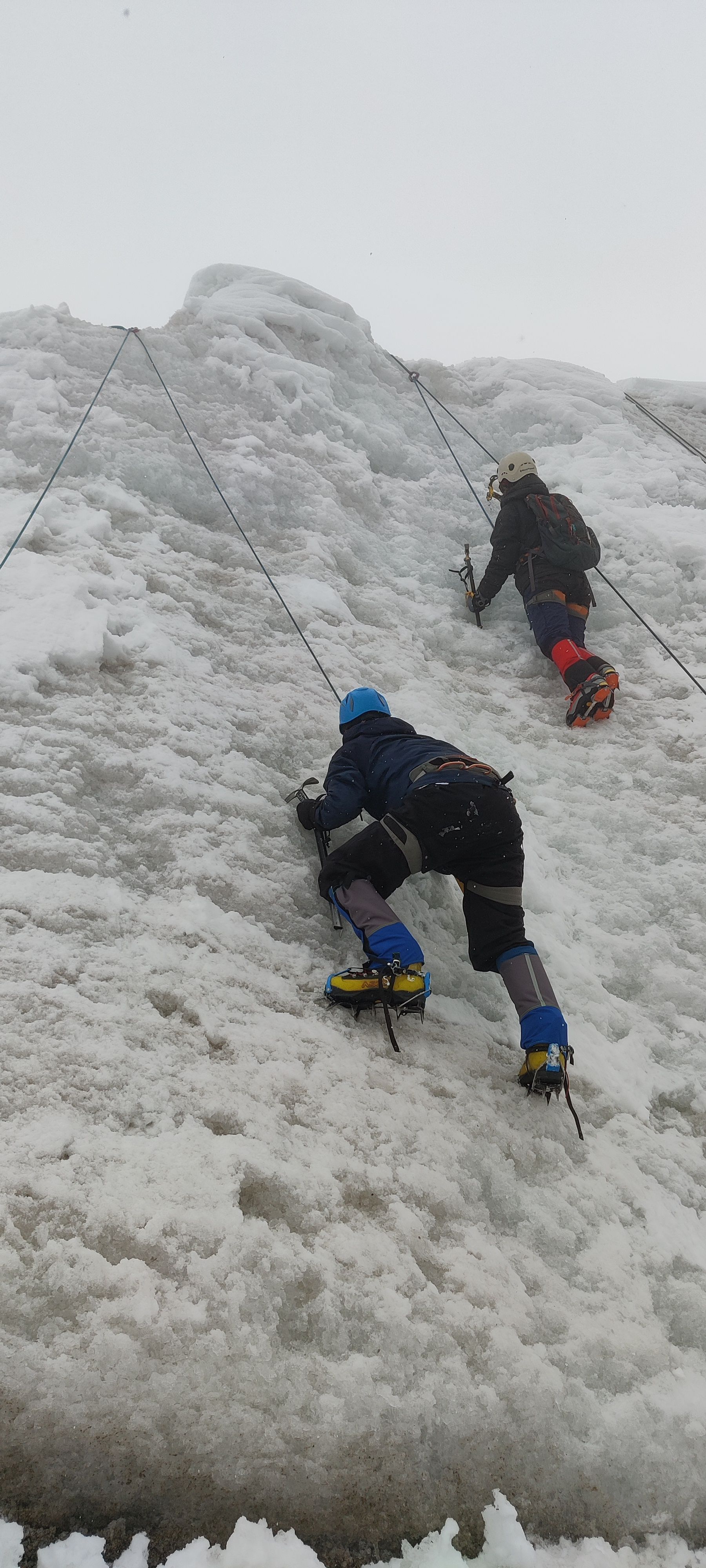
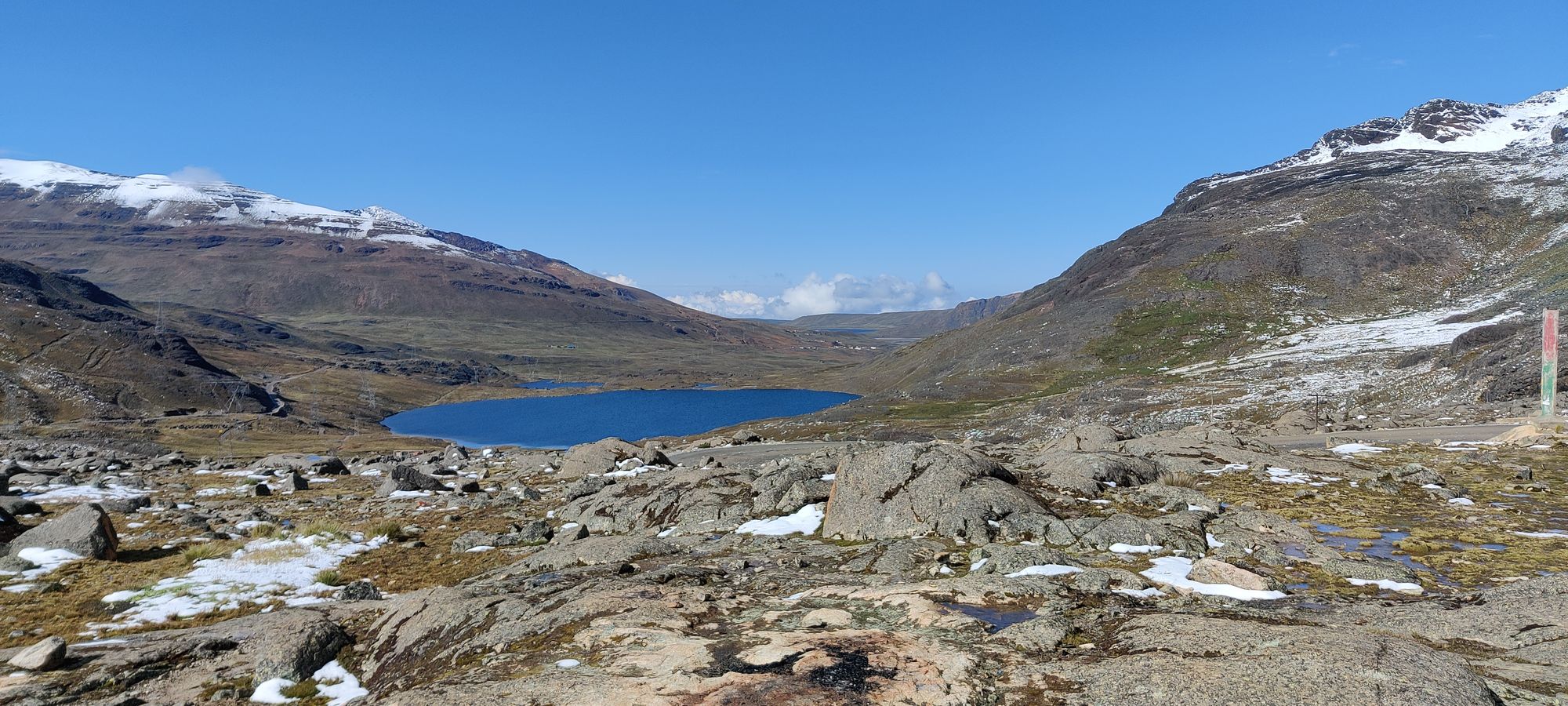
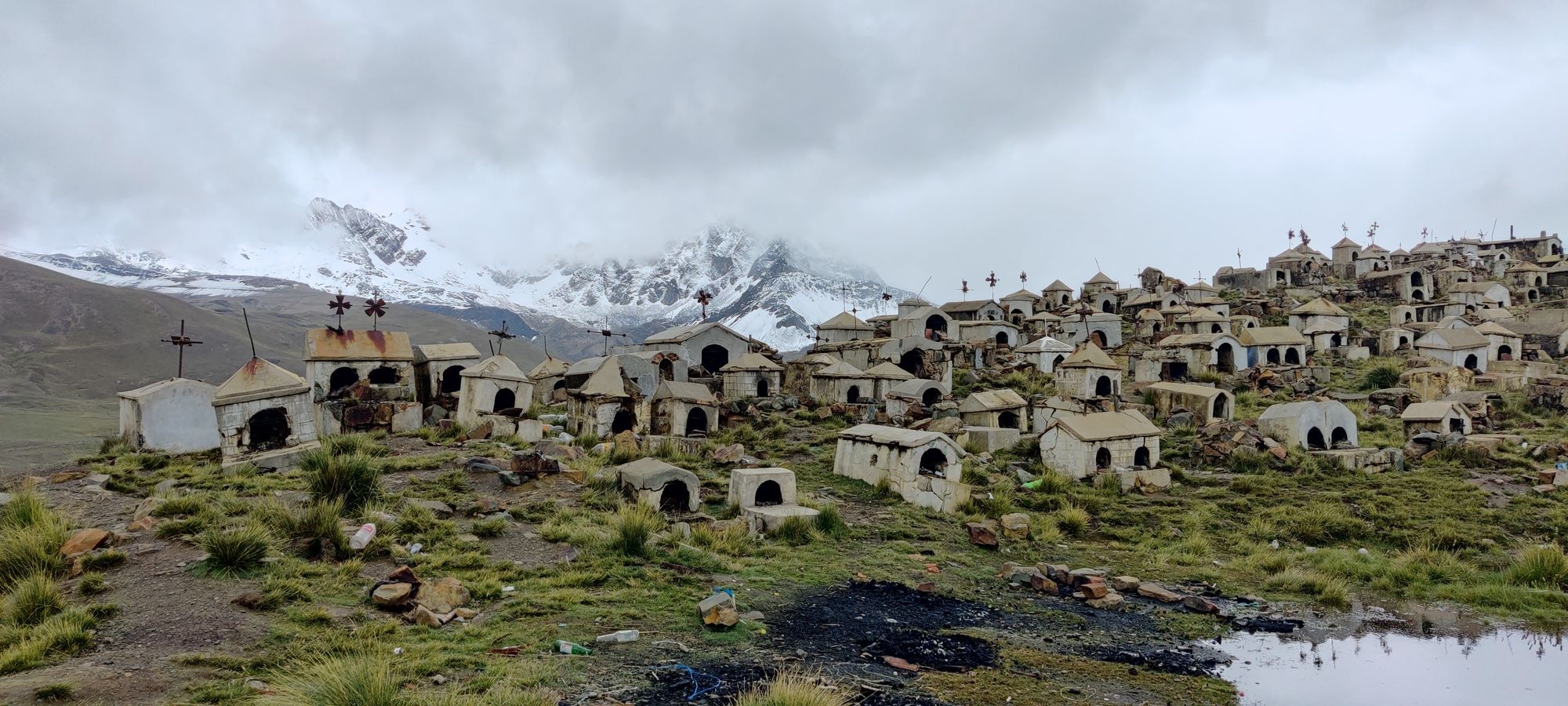
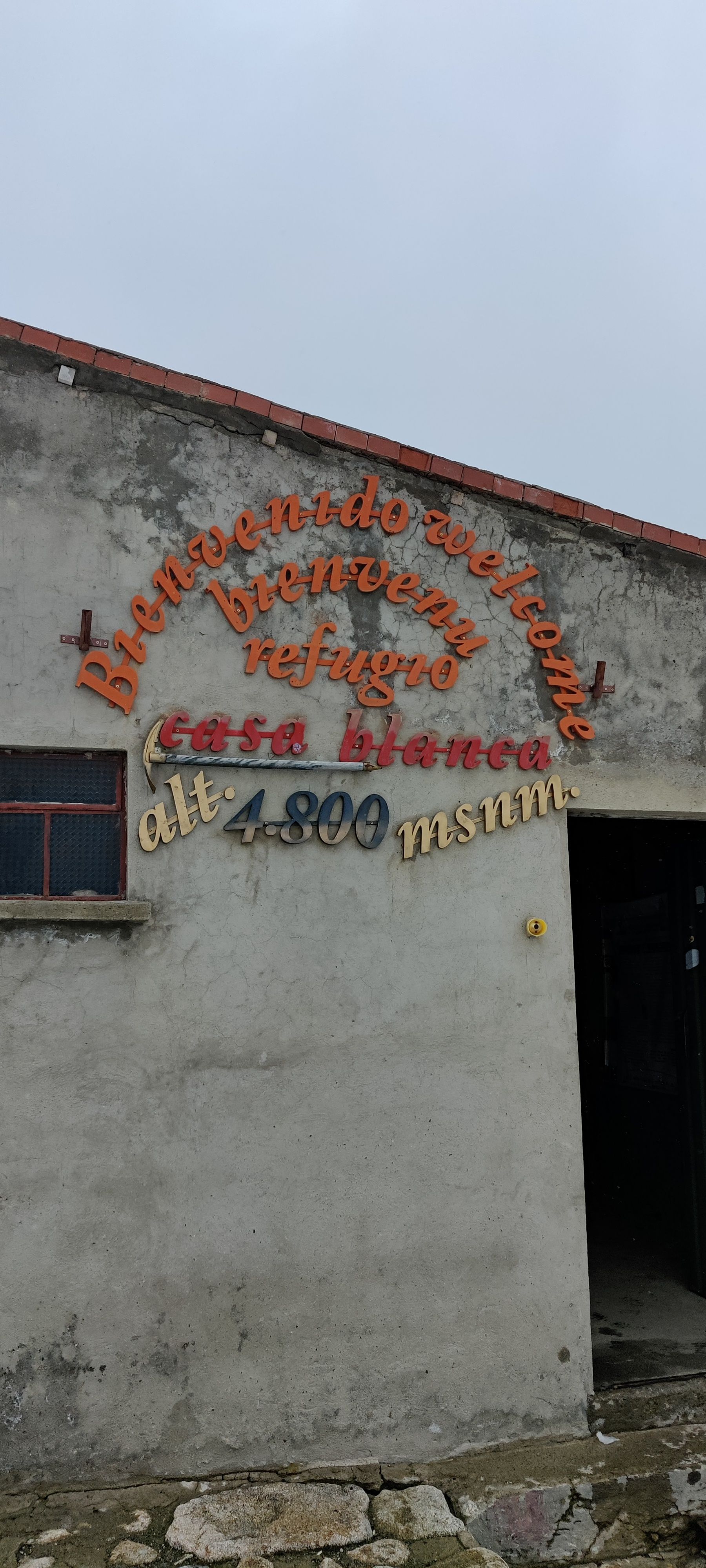
We spent the night at the base camp, resting on comfortable mats, and the next day we set off towards the high camp. The trail itself wasn't too difficult, but the thin air at such high altitudes made every step incredibly tiring. As we made our way, I couldn't shake off the feeling of exhaustion due to the lack of oxygen. By late afternoon, we reached the high camp, where we had a light dinner. In such extreme conditions, it's important to be cautious about what we eat, as the body is already under significant stress. We turned off the lights early, aiming to get some rest, knowing that we had to start the final leg of our hike around midnight to reach the summit by dawn. However, my attempts at sleep were in vain, as I was plagued by a strong headache: as we began the ascent, I realized that I had barely rested.
Despite everything, we started our long hike, but soon I was left behind with my guide providing support. Other groups were attempting to reach the summit on the same day, but I was significantly slower, essentially hiking alone with my guide. It was an incredibly challenging experience, and I had to frequently pause to regain my energy. We consumed plenty of coca mate in an effort to alleviate the discomfort, but unfortunately, I didn't feel significant improvement. This led us to contemplate the possibility of not reaching the top. In fact, it is risky to begin the descent when the snow starts melting, so it is crucial not to reach the summit too late.
Surprisingly, after many hours, I discovered a technique that proved immensely helpful. I began synchronizing my breath with each step, and this simple adjustment allowed me to reduce the frequency of my stops. As I approached the base of the summit, I noticed the rest of the group that had left me behind at the start of the expedition. They were taking a break while I felt an incredible surge of energy. The sight of the top looming so close ahead provided me with the determination and motivation to catch up to the adventurers in front of me. At that moment, I felt no need for rest; my focus was solely on closing the distance and embracing the remarkable view awaiting us at the summit.
Once at the summit, I was filled with profound emotions: I had made it! Finally, after months of planning and an exhausting hike, the most challenging one I had ever undertaken, I stood atop Huayna Potosi at an astounding altitude of 6088 meters. Overwhelmed by a sense of accomplishment, I joined my guide in offering coca leaves to Pacha Mama as a symbol of respect and gratitude for allowing us to reach such heights. The view was absolutely awe-inspiring. We marveled at the breathtaking landscape before us, capturing the immensity of the Titicaca Lake in the distance and the majestic peaks of the surrounding complex.
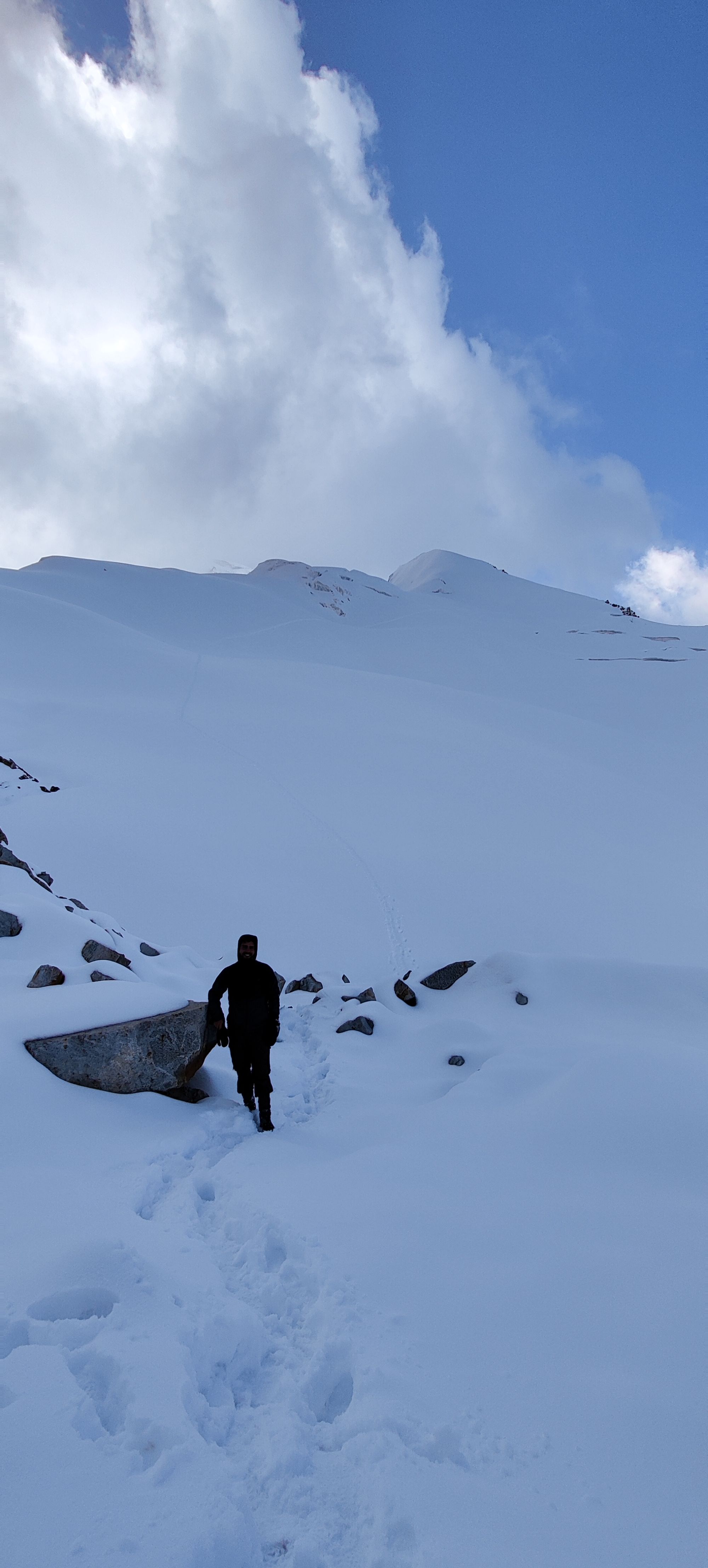
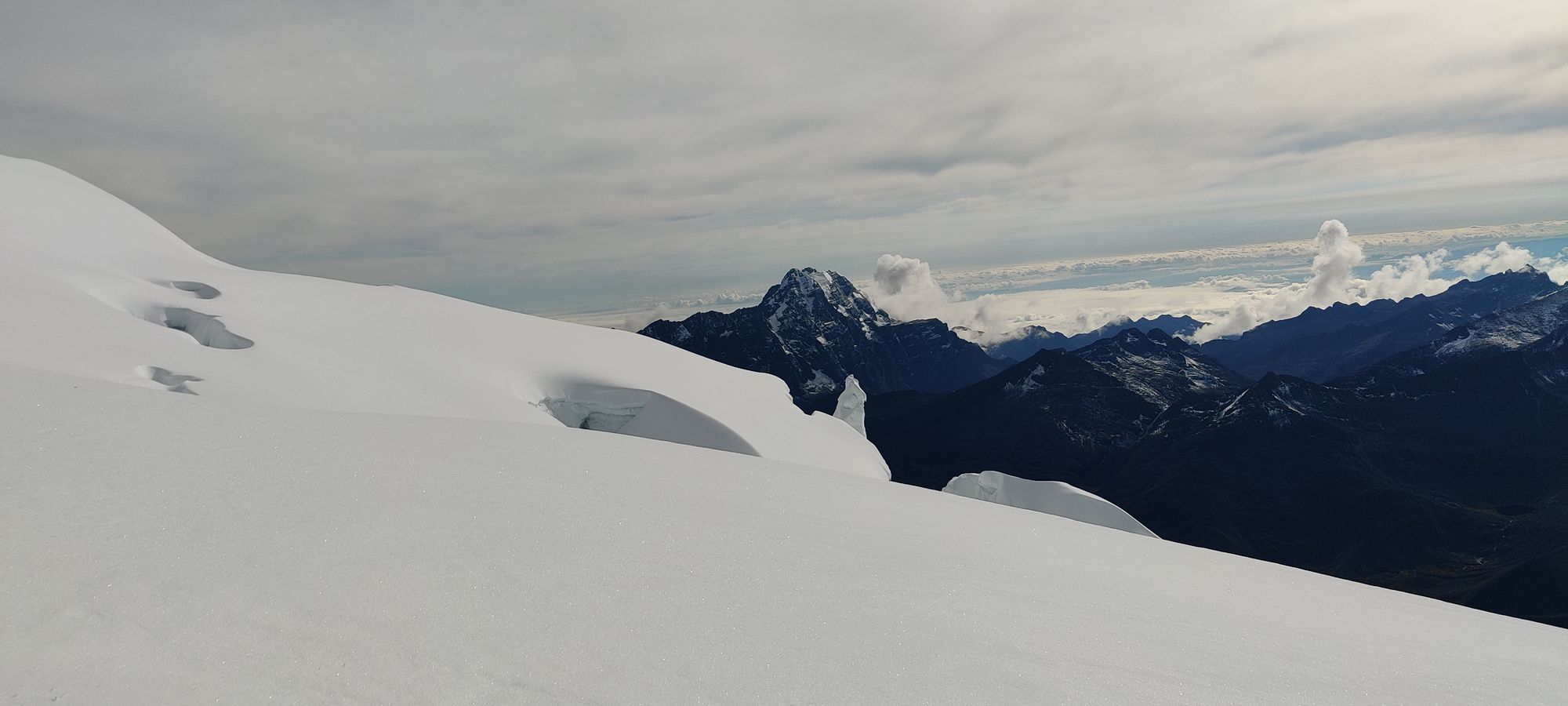
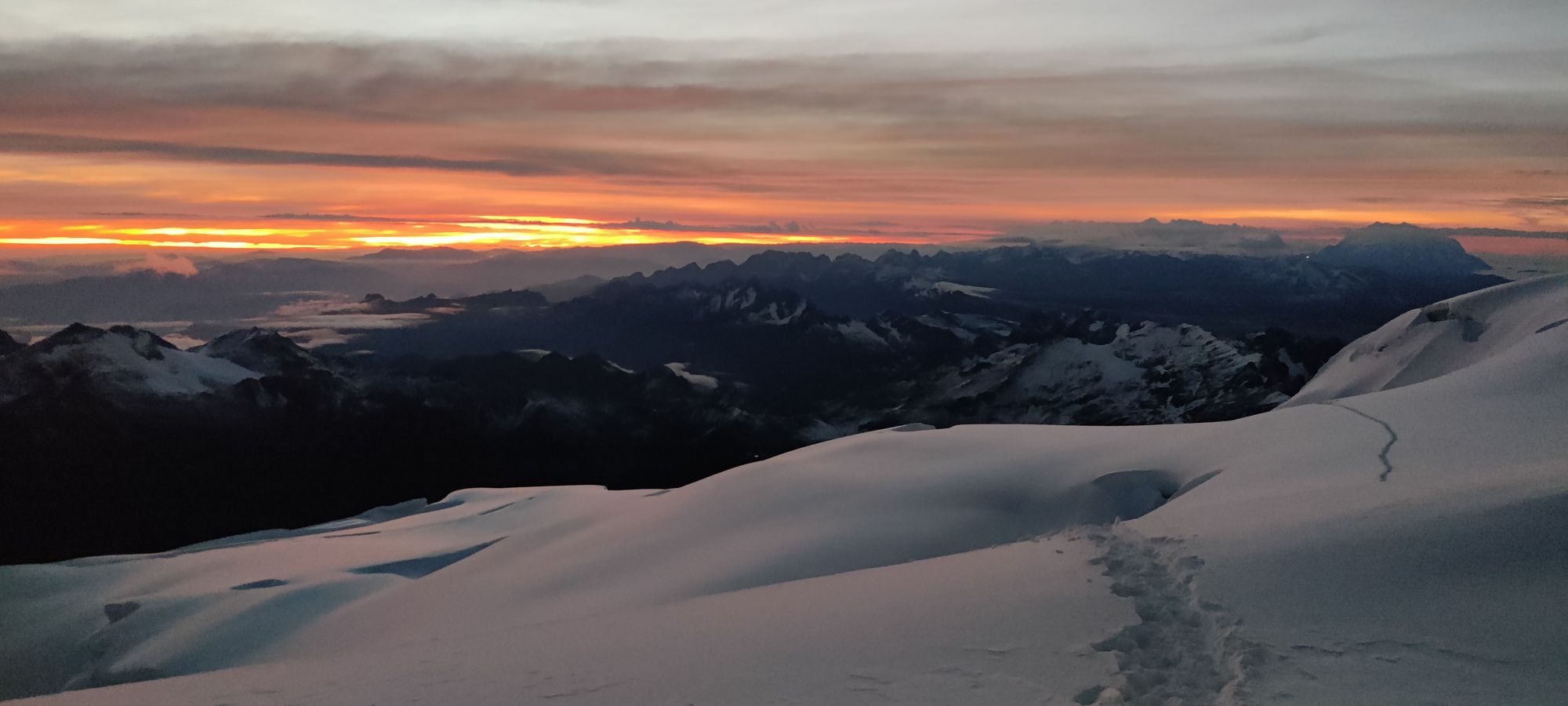
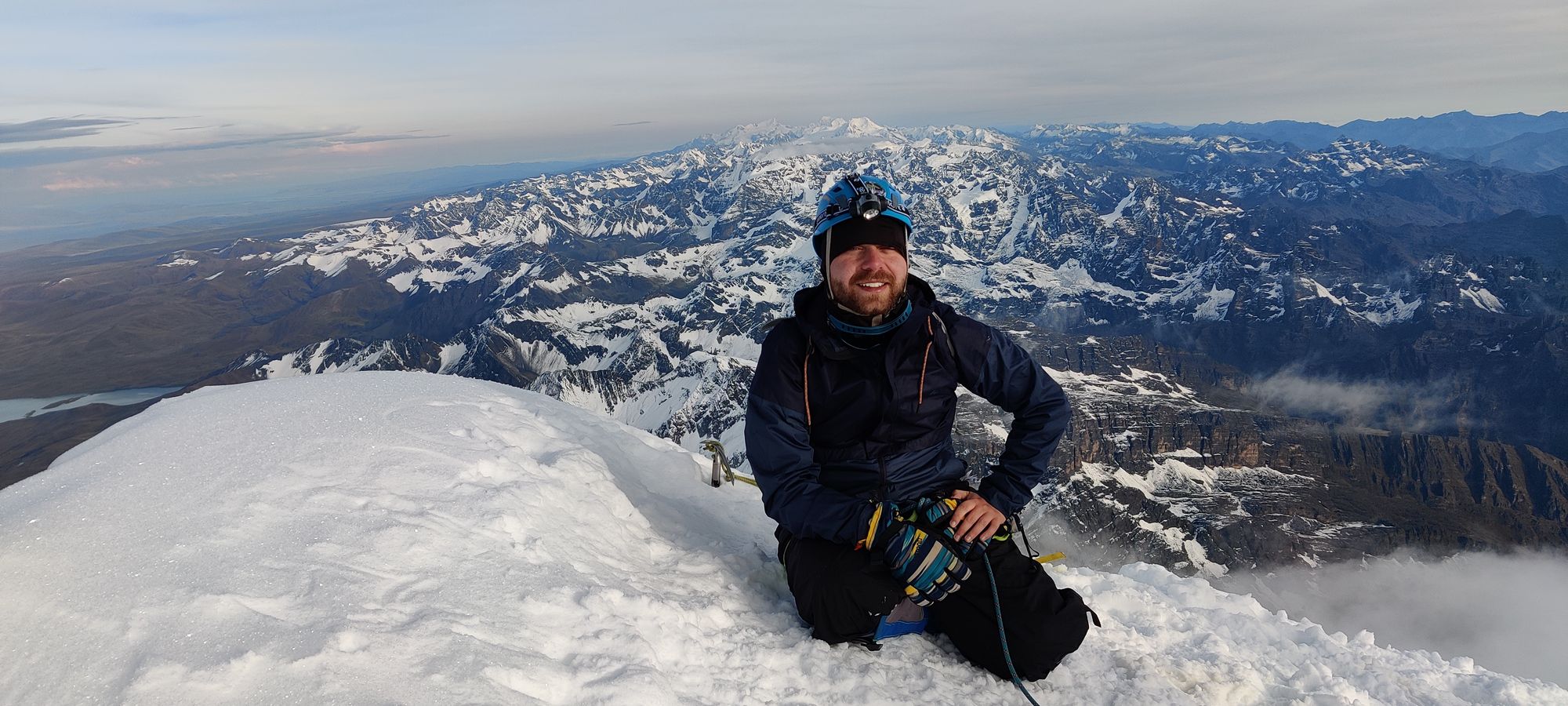
The descent was remarkably easier compared to the ascent, and by afternoon, I had returned to my hostel in La Paz. Despite the pain lingering in my body, I knew that in a couple of days, everything would be back to normal again.
Last Days in Bolivia
After my time exploring the wonders of Bolivia, I decided to spend my last few days in Santa Cruz, where I enjoyed a well-deserved break in a cozy Airbnb. During this time, I also took short trips to explore the surrounding areas and immerse myself in the local culture. With my time in Bolivia coming to an end, I was excited to embark on my next adventure: flying to Colombia. I still had the second month of unpaid leave in front of me at the moment, even though I felt to have lived one year of adventures.